Every quality event, in one place
Log nonconformities, feedback, complaints and incidents in one place, with severity, owner and status, so nothing sits in an inbox or spreadsheet.
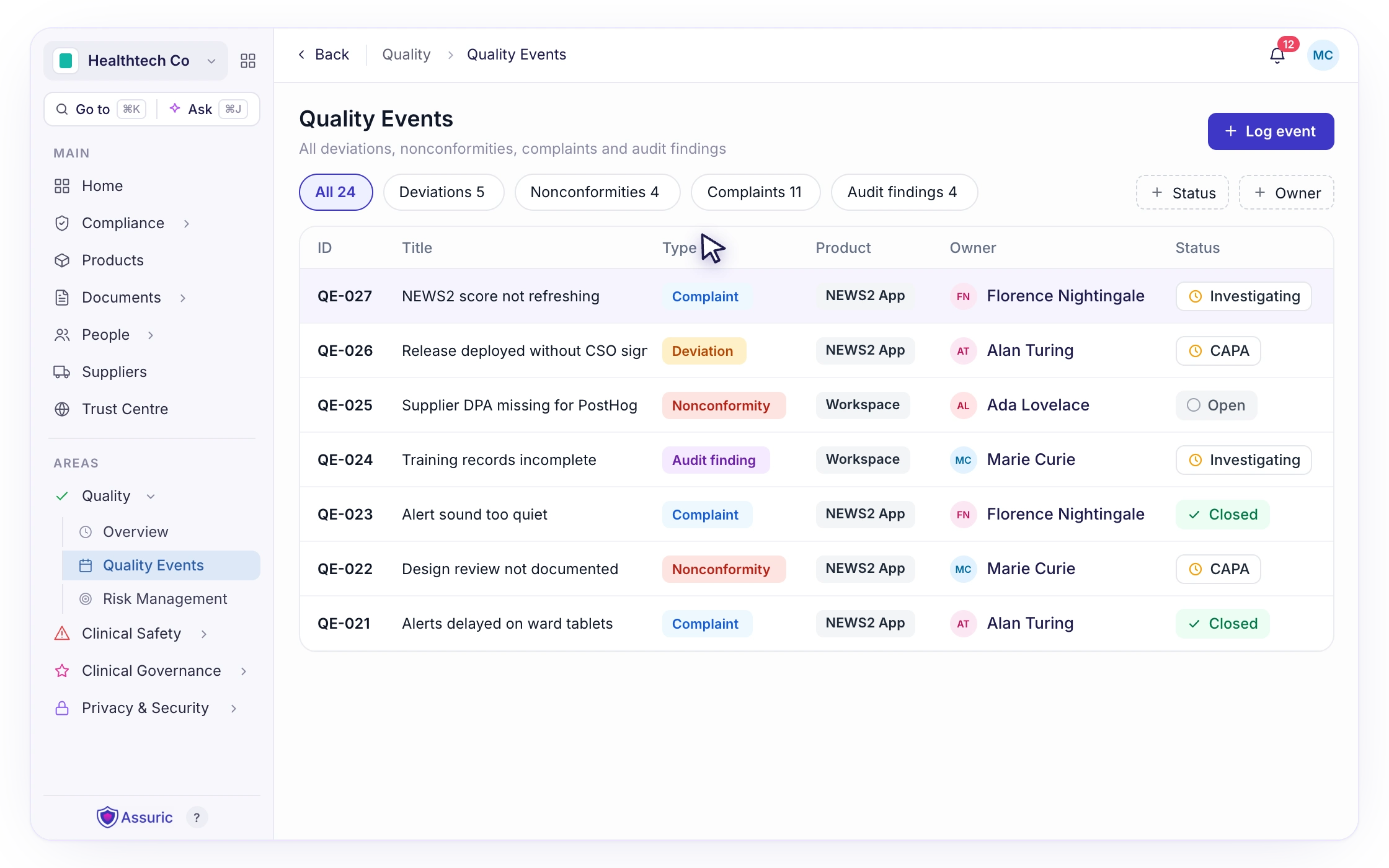
Manage nonconformities, feedback, complaints and incidents in one place, investigate root causes, and track every CAPA and change request through to a verified, effective fix and closure.
Trusted byquality teams


Features
Log nonconformities, feedback, complaints and incidents in one place, with severity, owner and status, so nothing sits in an inbox or spreadsheet.
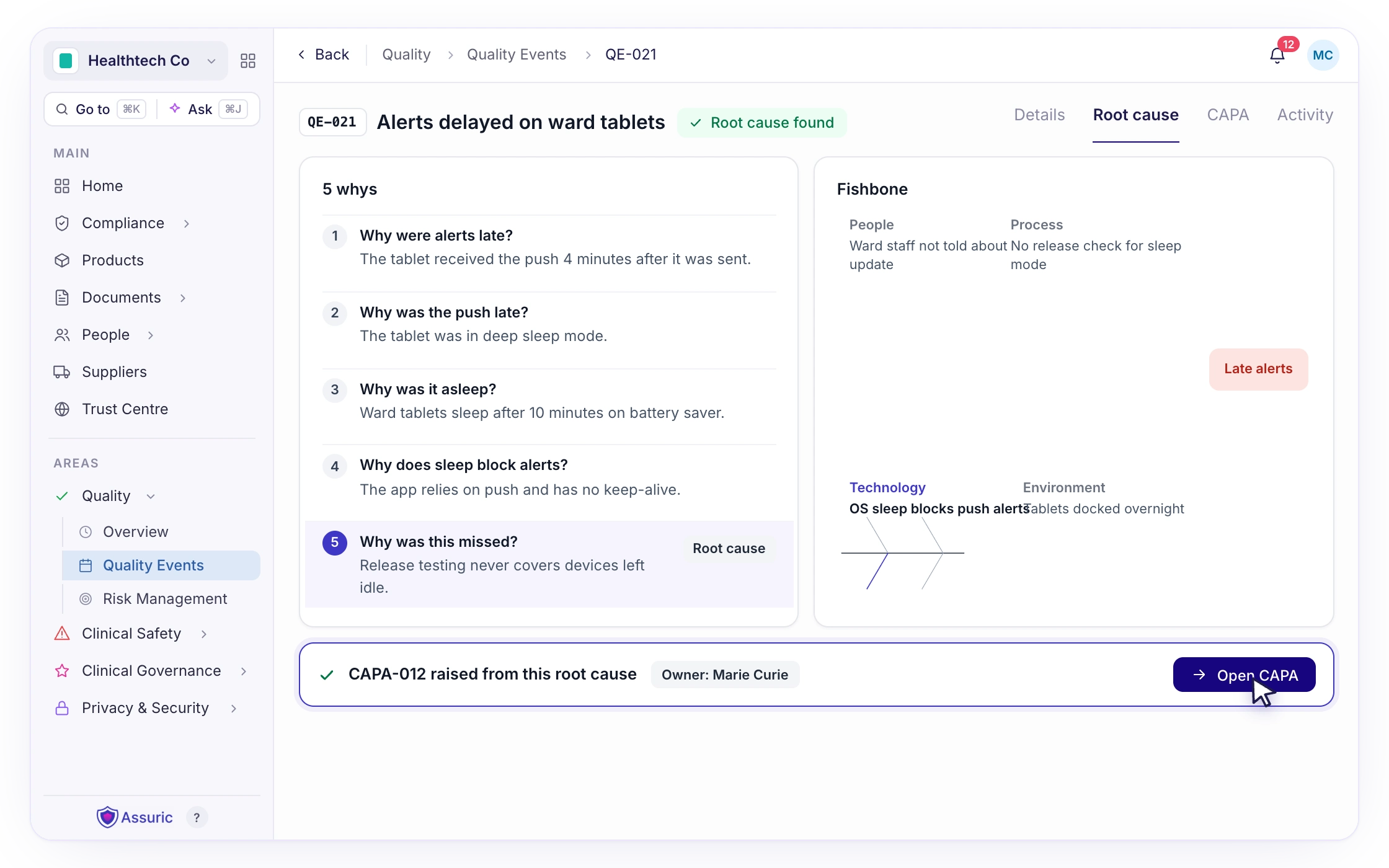
Investigate each event with a structured root cause analysis, record what you found and who was involved, and decide whether it needs a CAPA.
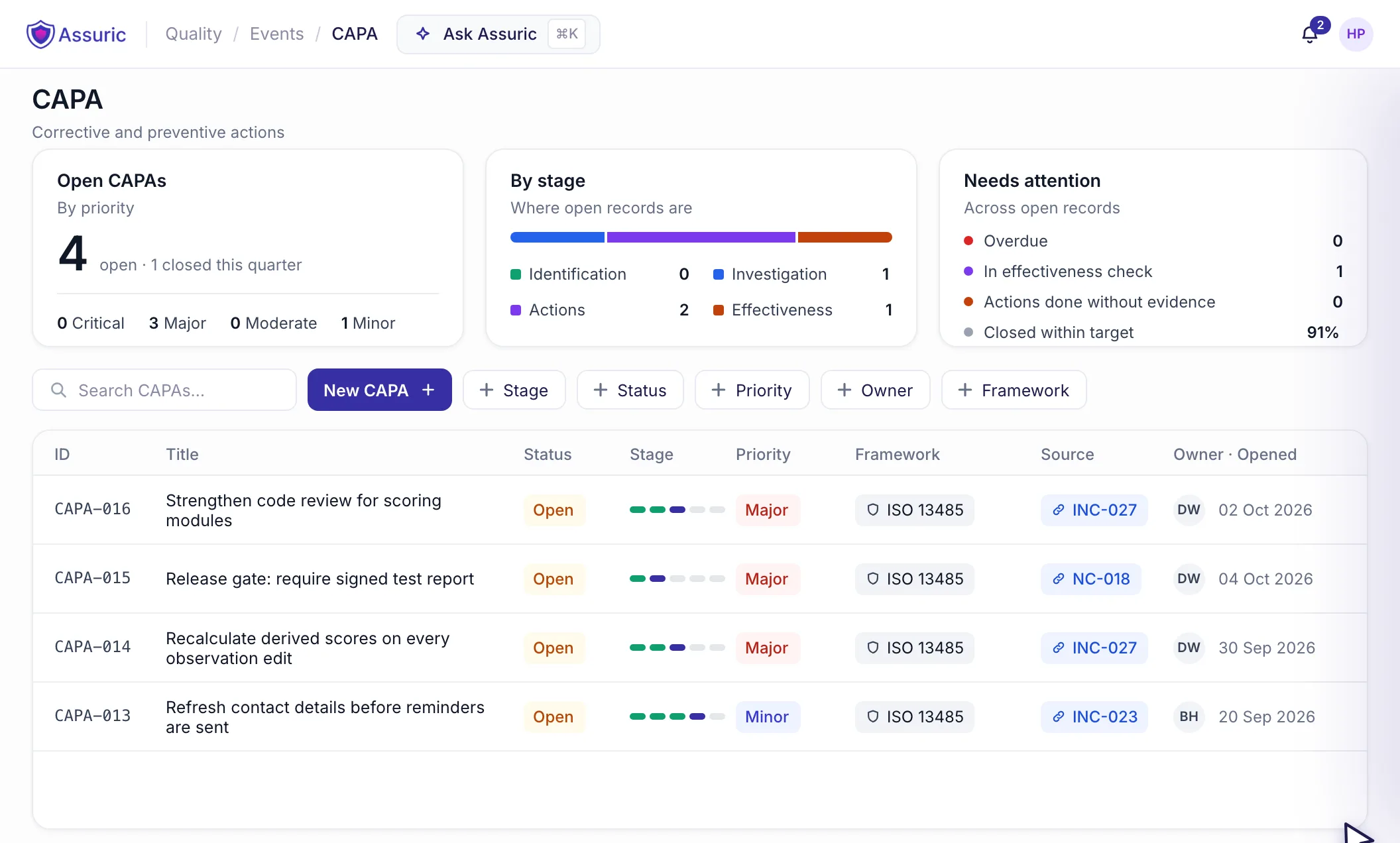
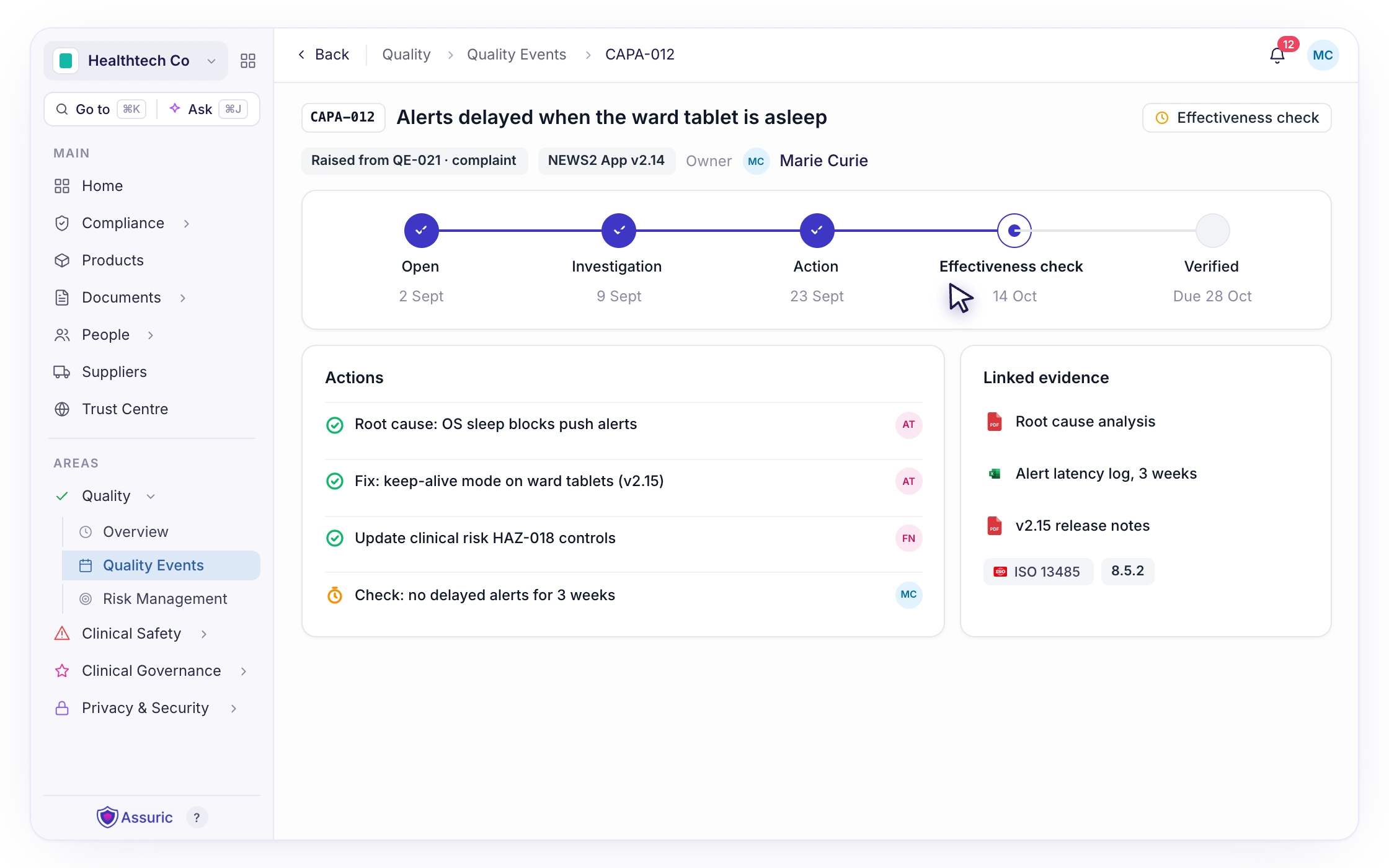
Define corrective and preventive actions, assign owners and due dates, and track every action to closure with evidence attached. Effectiveness checks must pass before a CAPA closes, so you can prove the problem stayed fixed.
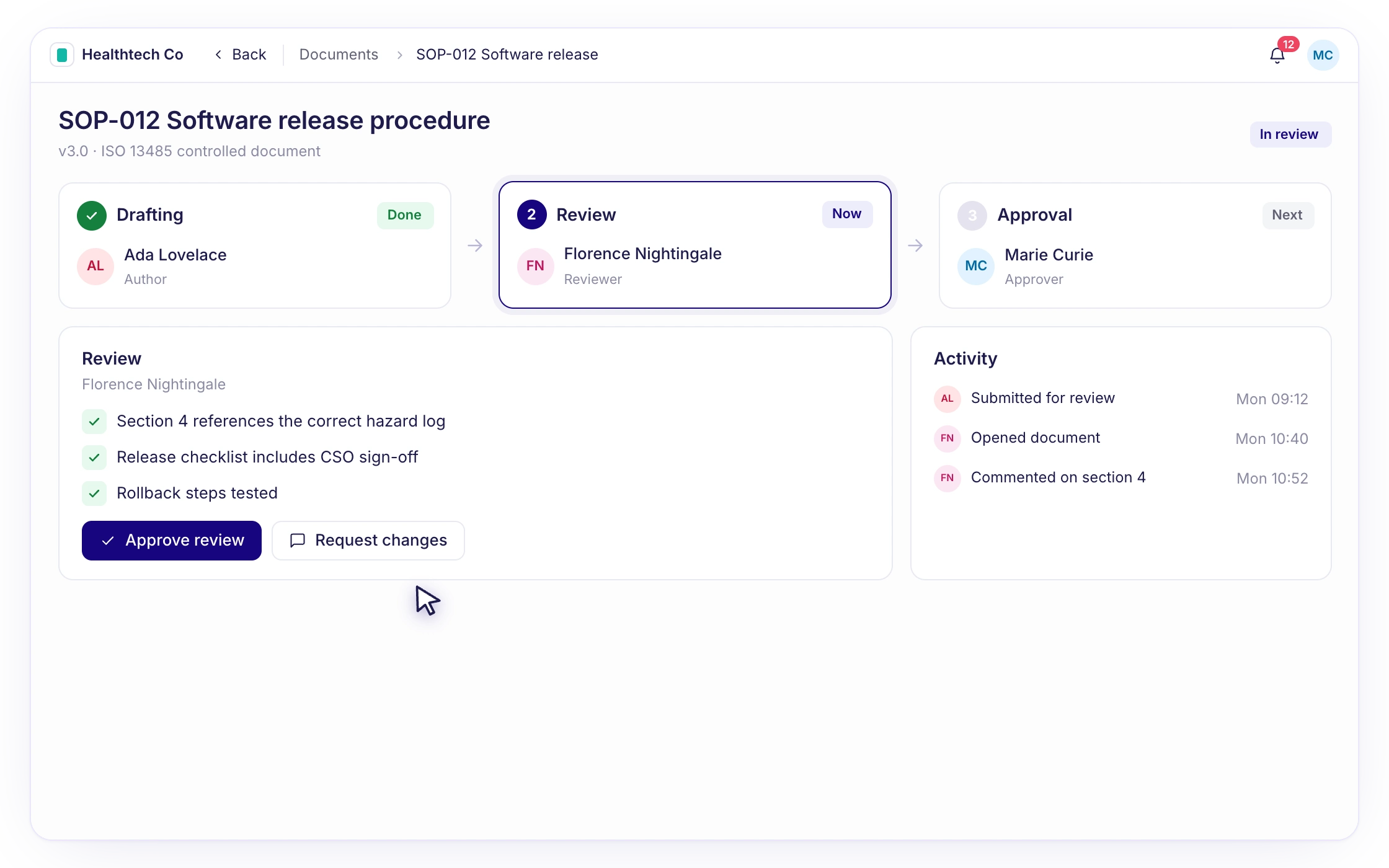
Set who signs off each stage, from investigation to closure, and in what order. Every approval is a 21 CFR Part 11 compliant e-signature, with the signer, meaning and time on record.
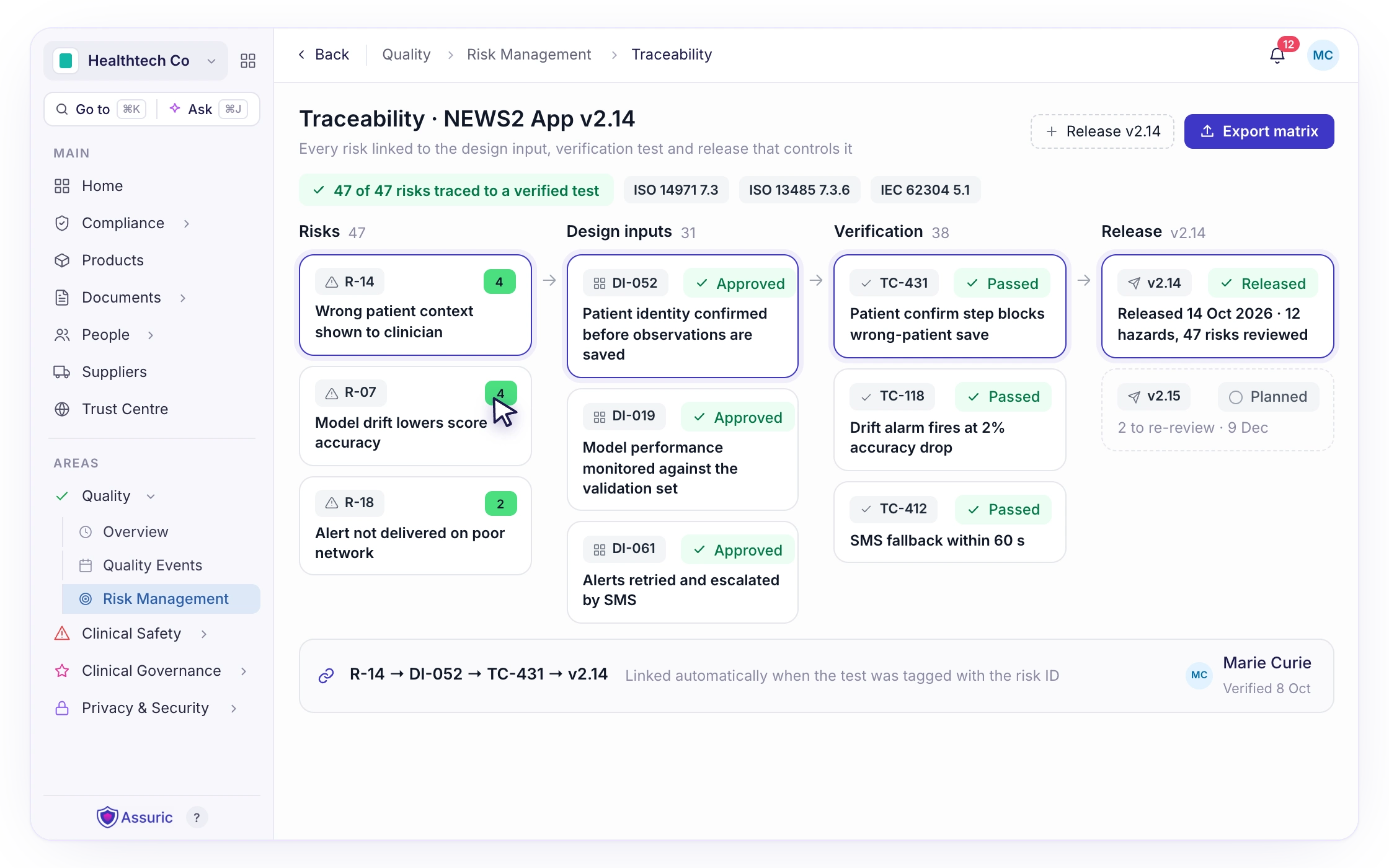
Link events and CAPAs to the risks, documents and releases they affect, flag risks for review, and raise change requests from the same record, with full traceability in either direction.
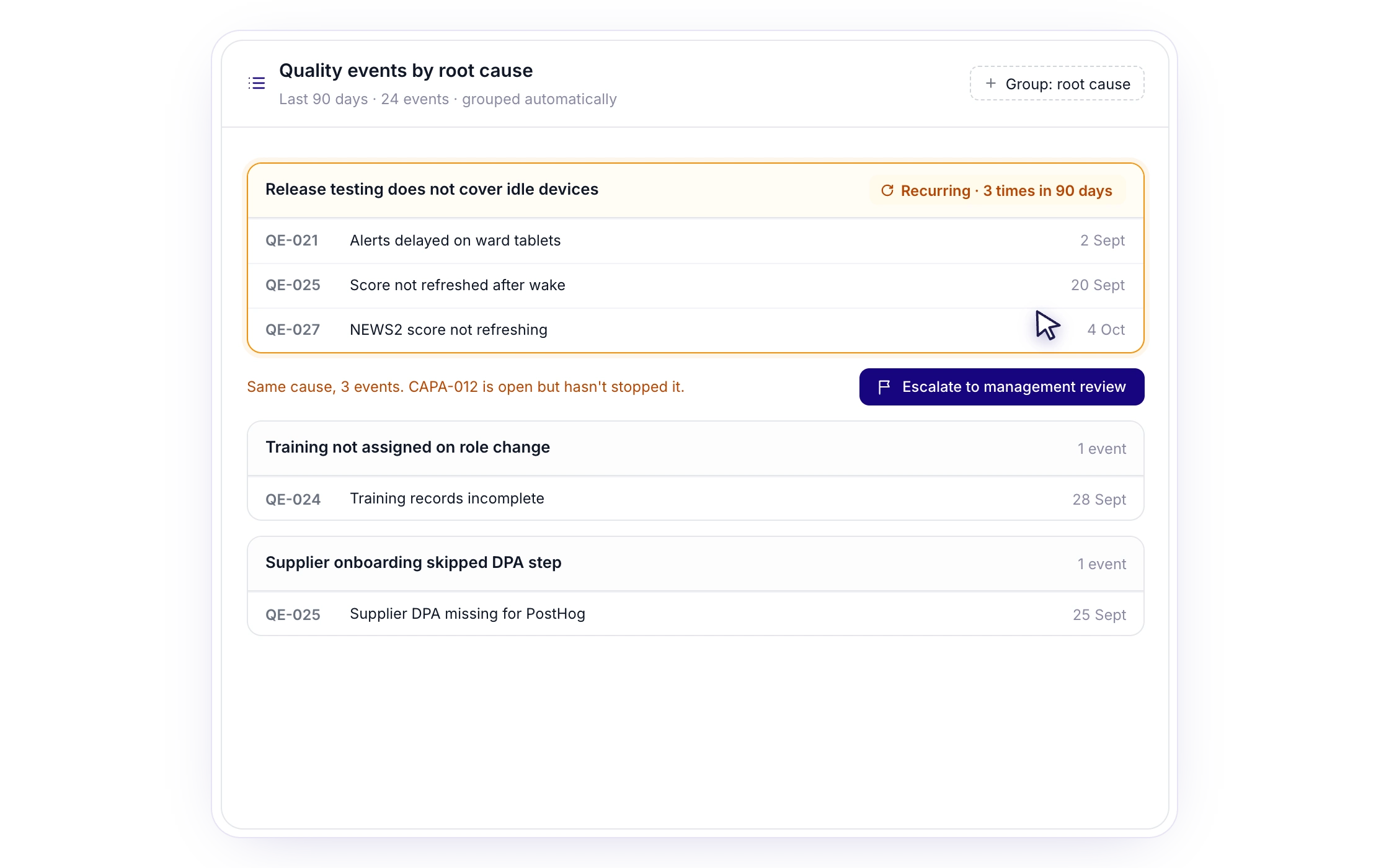
See quality events and CAPAs by type, product and status over time, so recurring problems surface before your management review, not during an audit.
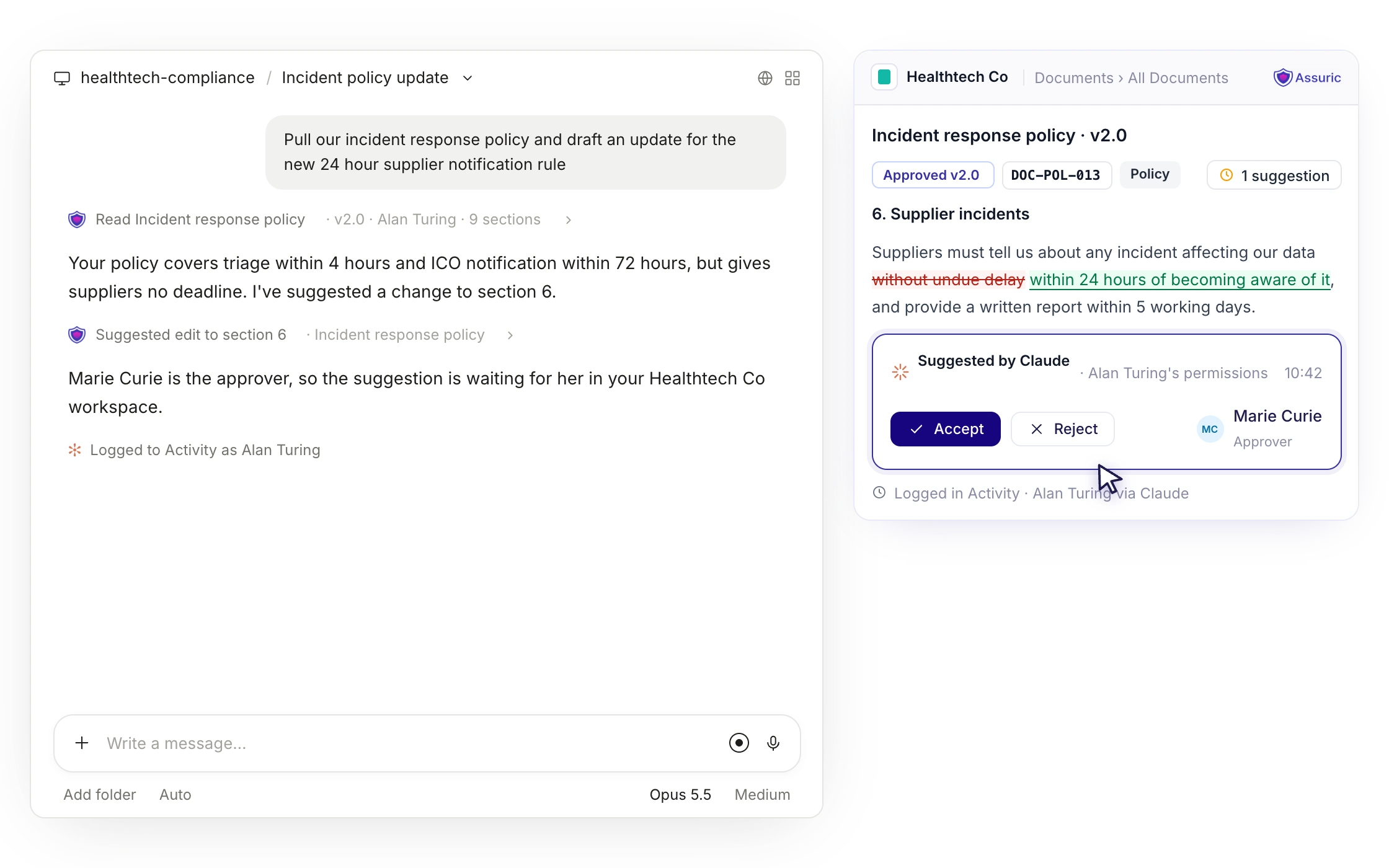
Raise events automatically from your connected tools through integrations, let AI draft investigations and suggest root causes and actions, or work from Claude, ChatGPT, Copilot or Cursor through MCP. Every AI suggestion is a tracked change that a named person accepts.
Benefits
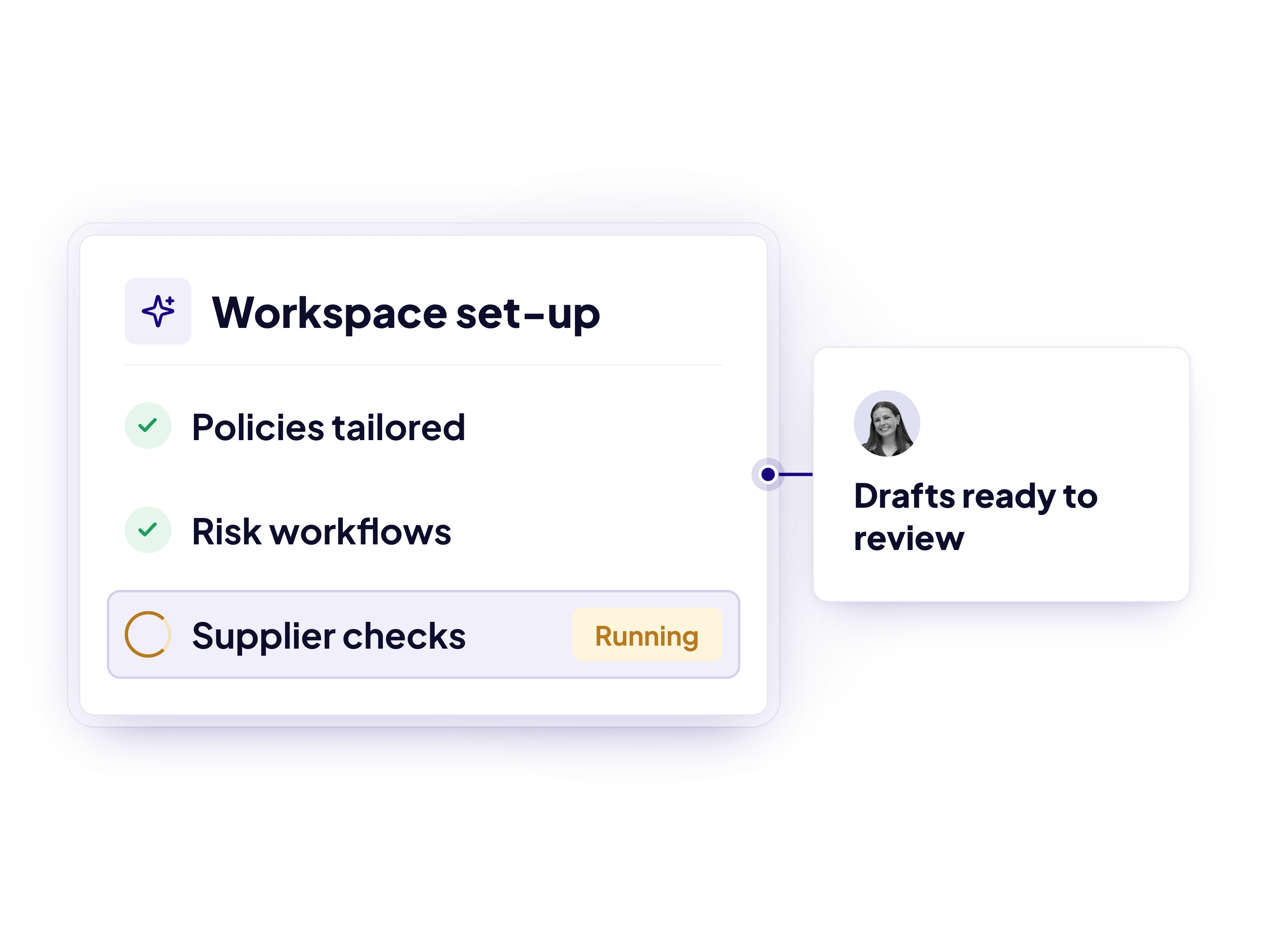
AI, integrations and MCP take on the logging, drafting and chasing, so a small quality team can run a full CAPA process.
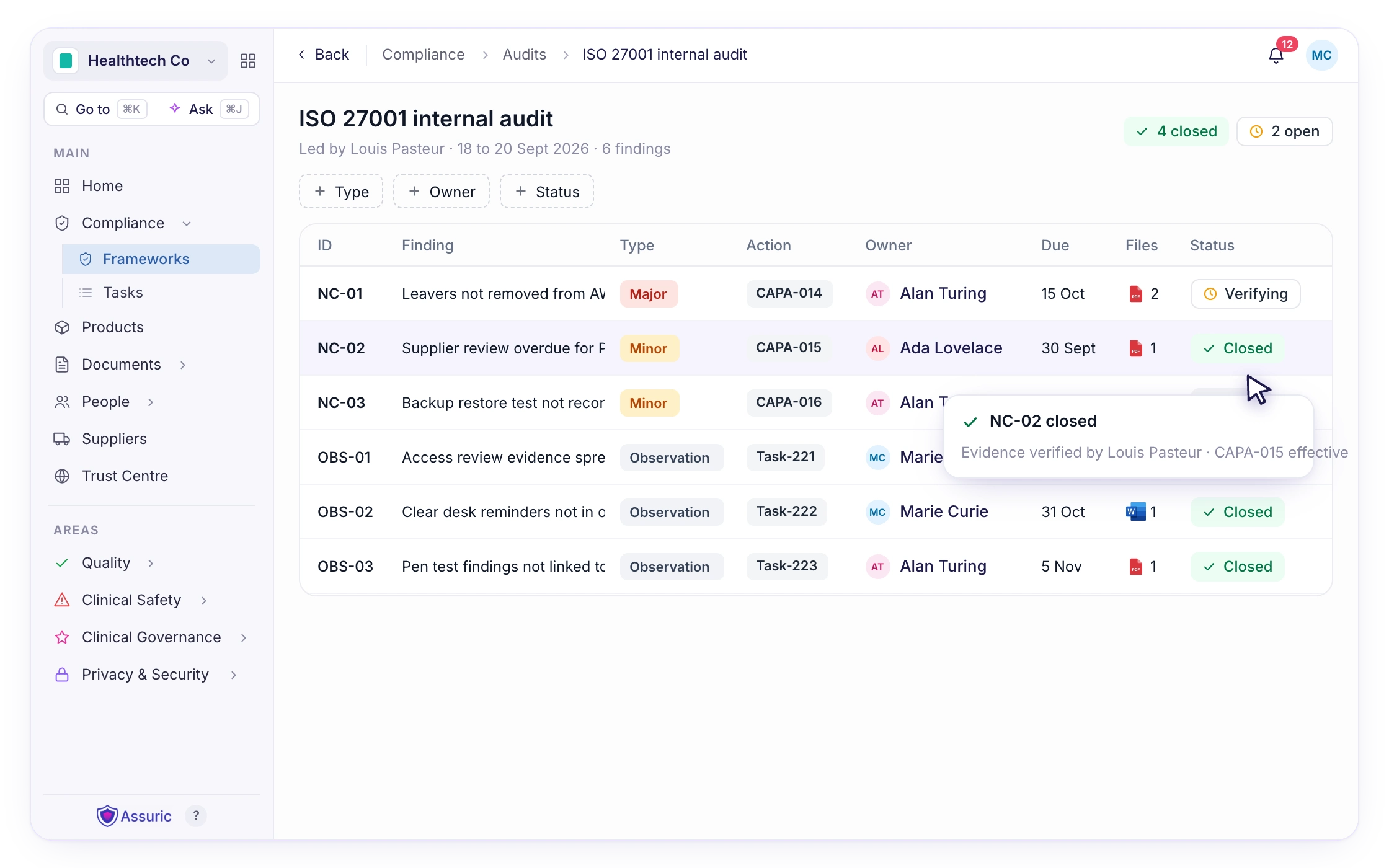
Every event has an owner, every action a due date, and every CAPA an effectiveness check before it closes, so issues are solved, not just closed.
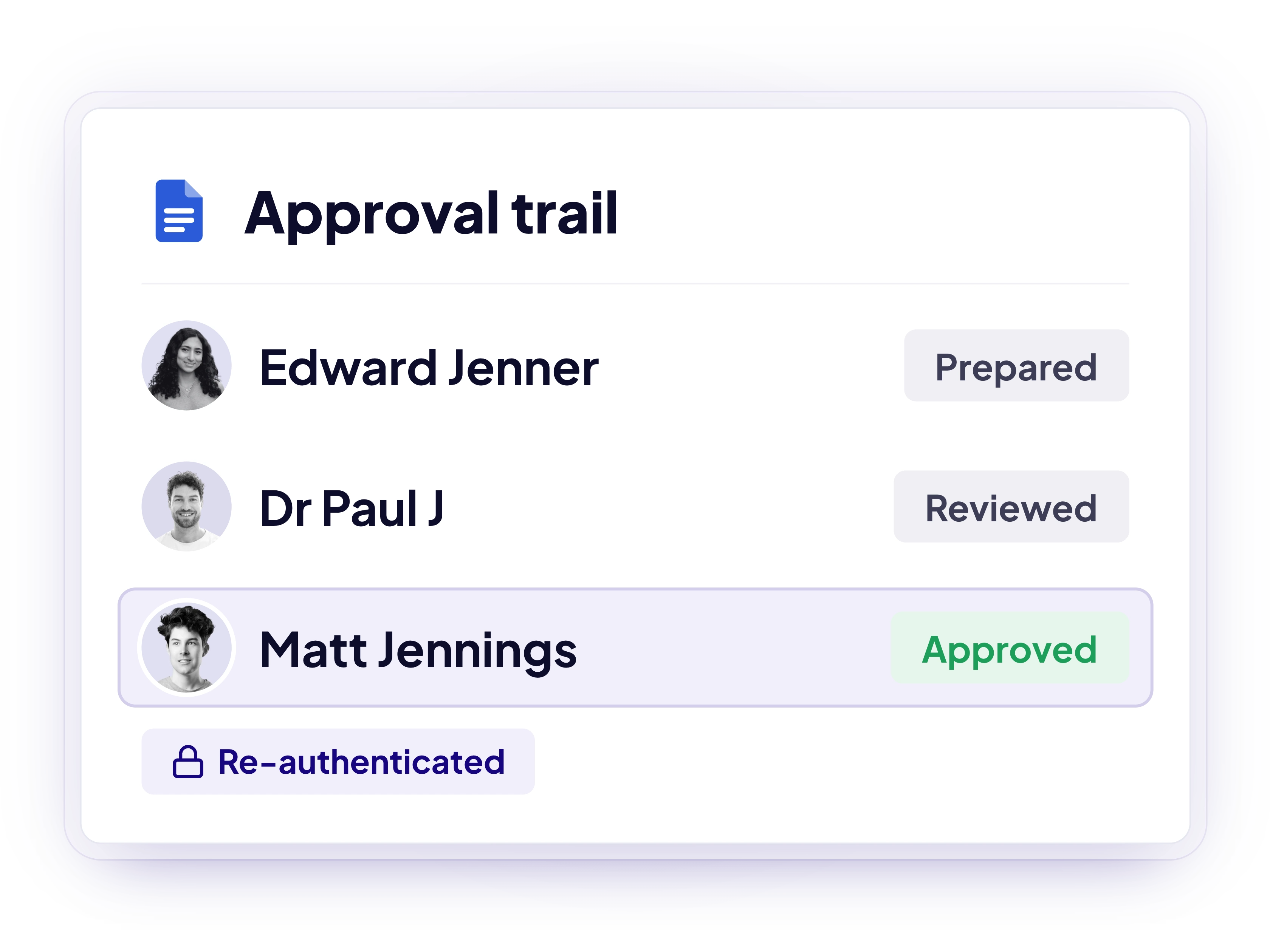
Every event, decision, approval and piece of evidence is signed and on record, so a CAPA review is a look at what’s already in Assuric.
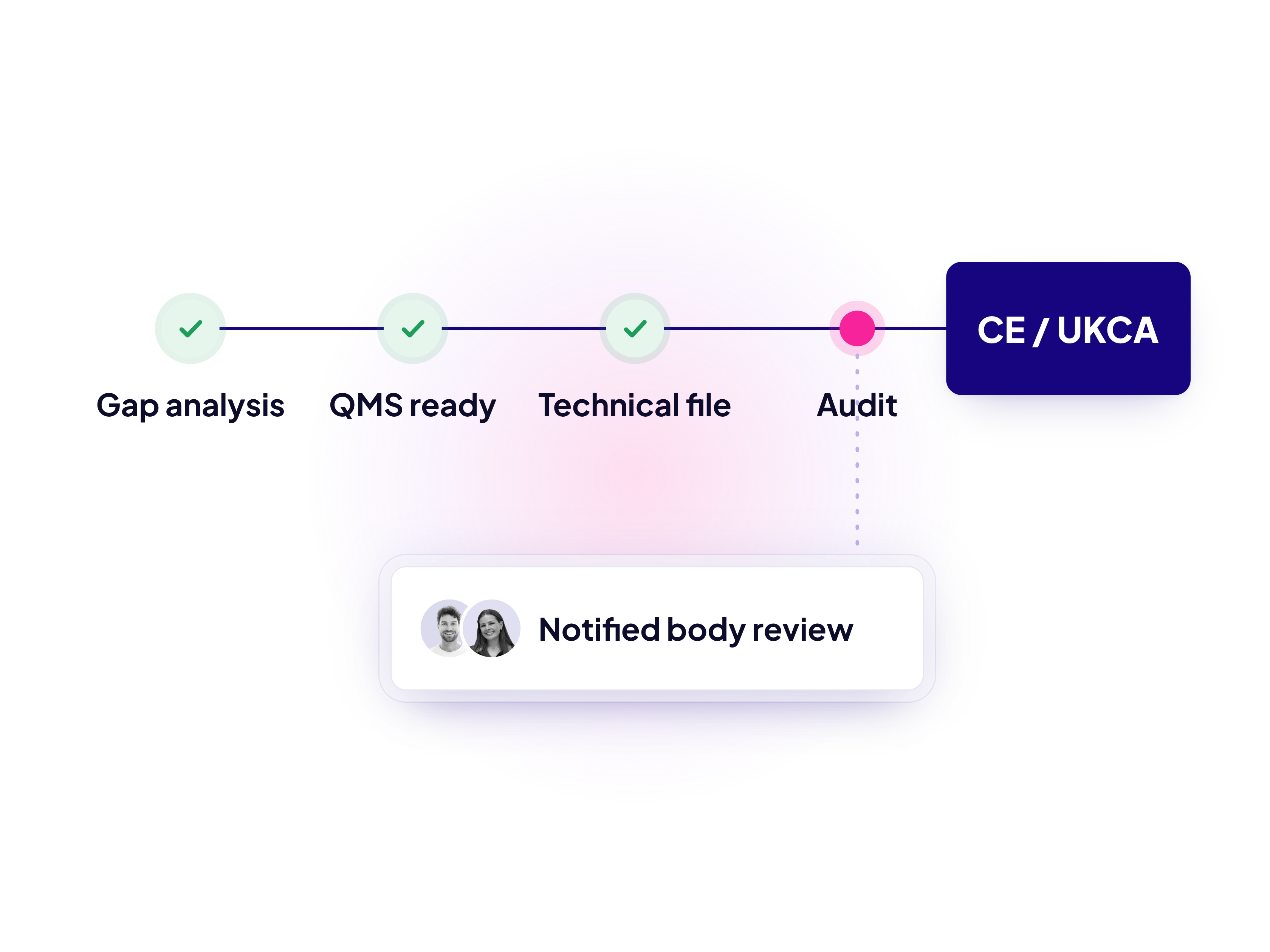
A CAPA process that’s already structured, signed and traceable is one less thing standing between you and ISO 13485 certification.
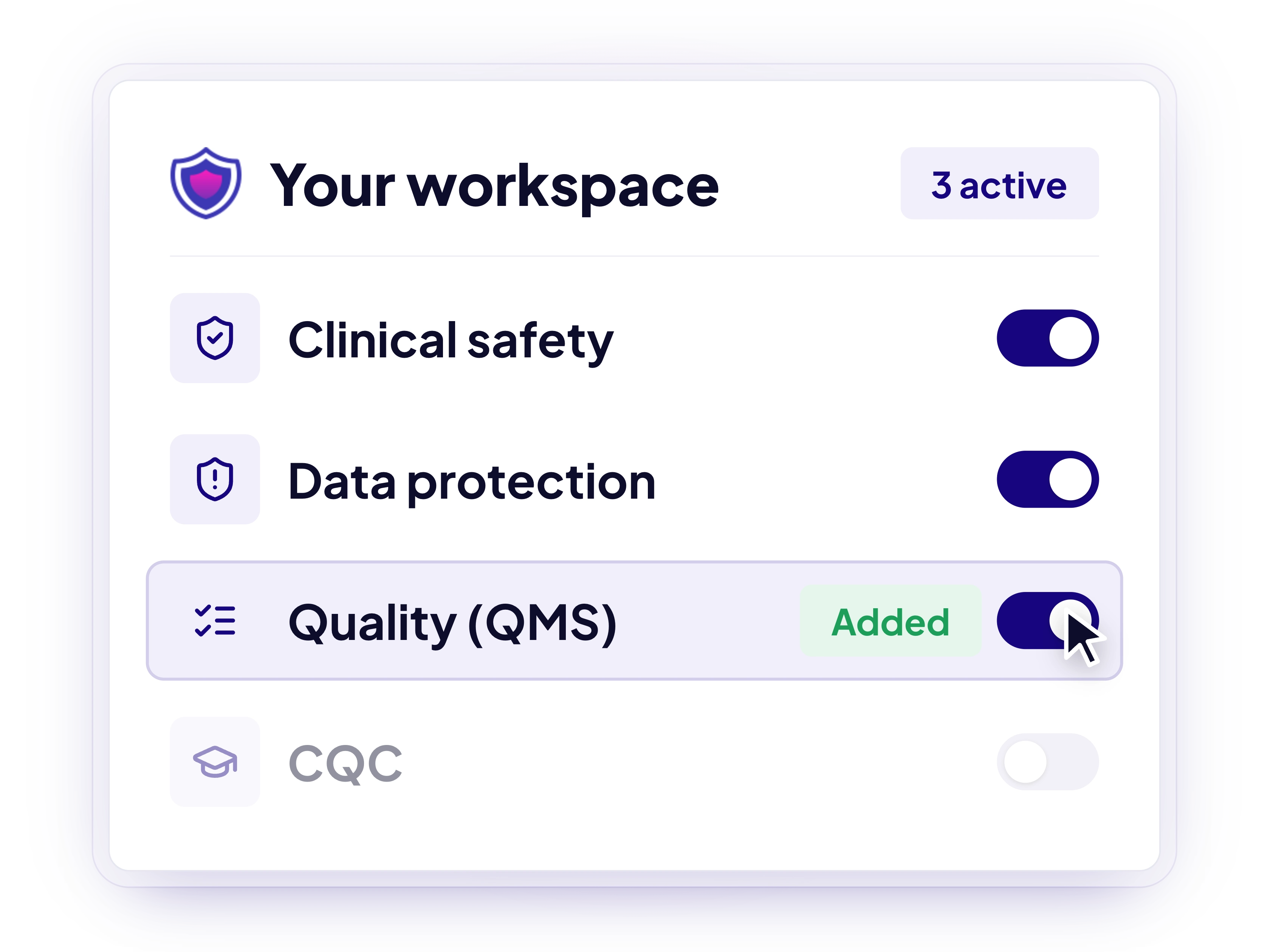
Quality events and CAPAs sit alongside your QMS, risk file, ISO 27001, GDPR and NHS compliance, so you run one integrated management system.

“We couldn't speak highly enough of both the Assuric team and the platform itself, which is incredibly easy to use, and with the skill and hardworking nature of the Assuric team. They've been a key component in accelerating our progress and deployments!”
Maks Kozarzewski
COO, VitVio

“The Assuric platform is a game changer in the clinical risk management field. It has been carefully designed to make the job of a CSO significantly more streamlined. The team are excellent and responsive to any product suggestions I have requested, and it has been a pleasure to work with them.”
Paul Llewellyn
CCIO, Accenture

“Assuric has been fantastic in helping us quickly and safely navigate regulatory compliance in the UK. From completing Cybersecurity requirements to DSPT, DCB0129, and DTAC, the team was supportive, extremely knowledgeable, and the platform made everything quick and straightforward. A separate regulatory company we consulted at the beginning even remarked on how quickly we achieved compliance!”
Katie Baker
Director UK & Ireland, Tandem
Overlapping requirements and evidence are mapped across frameworks automatically, so you never do the same work twice.
A corrective and preventive action is a structured process for dealing with quality problems. Corrective action investigates a problem that has happened and fixes its root cause so it doesn’t recur; preventive action looks for potential problems, often spotted through trends, and puts controls in place before they happen. ISO 13485 requires documented procedures for both (clauses 8.5.2 and 8.5.3), including the investigation, the actions taken and a review of their effectiveness. FDA 21 CFR 820 has equivalent requirements, EU MDR and UK MDR rely on your ISO 13485 quality system to meet them, and ISO 27001 and ISO 9001 have similar corrective action requirements, which Assuric maps across frameworks.
Anything that shows a product, process or system isn’t meeting its requirements. That includes nonconformities found internally, complaints and incidents from the field, user feedback that points to a problem, audit findings and supplier issues. Each is logged, assessed for risk and either closed with a recorded rationale or escalated to an investigation and CAPA.
A complaint, as defined in ISO 13485, is any written, electronic or oral communication alleging a deficiency in a device’s identity, quality, durability, reliability, usability, safety or performance after it has been released. An incident, under UK MDR and EU MDR, is a malfunction or deterioration in a device’s performance, including use errors caused by its design or instructions; a serious incident is one that led, or might have led, to death or a serious deterioration in health. Feedback is broader: any information about whether you’re meeting user requirements, which ISO 13485 asks you to gather and monitor whether or not it alleges a problem. The categories often overlap, for example a complaint that describes an incident, so in Assuric they can be linked to the same investigation.
Each is logged with its source, date received, owner and status. Complaints are acknowledged, investigated and closed with an outcome, with response deadlines tracked throughout, and incidents are assessed against the MHRA reporting threshold with the decision and reasoning recorded either way. Feedback is reviewed for trends and escalated where it points to a real issue. Where several records relate to the same event, such as an incident and the complaint that reported it, they share one investigation so you don’t duplicate work, while each keeps its own record and reporting decision.
No. Each event is assessed for risk, recurrence and impact, and a CAPA is raised where that assessment justifies it. Low-risk, one-off events can be corrected and closed without one. Either way, the decision and the reasoning behind it are recorded, which is what auditors look for.
When you plan a CAPA, you set an effectiveness check with clear criteria and a date, for example no recurrence of the issue over three months. When the check is due, the result and supporting evidence are recorded. If it passes, the CAPA can close; if it fails, the CAPA stays open and the root cause is revisited.
Raise a change request from a quality event or CAPA, or on its own. Assess its impact on your risks, documents and releases, route it through your approval gates, and record how and when it was implemented. Every change traces back to the issue that prompted it, so you can show an auditor why a document, process or product changed.
Yes. Approvals at each gate, from investigation through to closure, are compliant e-signatures that record who signed, what they were signing for and when. Every action sits in an audit trail that can’t be edited or deleted, so the full history of each CAPA stays on the record.
AI can draft investigations and suggest likely root causes and actions, drawing on the event itself and your existing records, such as similar past events, linked risks and relevant procedures. Events can also be raised automatically through integrations, or created and updated from Claude, ChatGPT, Copilot or Cursor through MCP. Every AI suggestion is a tracked change that a named person reviews and accepts.
Complaints and incidents captured through post-market surveillance can raise quality events and CAPAs directly, so issues from the field follow the same investigation, approval and closure process. What you learn also feeds your trend analysis and PMS reports, closing the loop between the field and your quality system.
Yes. As part of free migration, we bring your existing quality events, investigations and CAPAs across from spreadsheets or your current system, with their history, owners and status intact, so you don’t lose the record auditors will ask to see.
See how Assuric connects your quality events, CAPAs, risk file and releases in one system.


