
Documented processes, not a certificate
At Class I you need documented design controls, risk management and post-market processes rather than a certified quality system. Having them in a real system is what makes moving up a class cheap later.
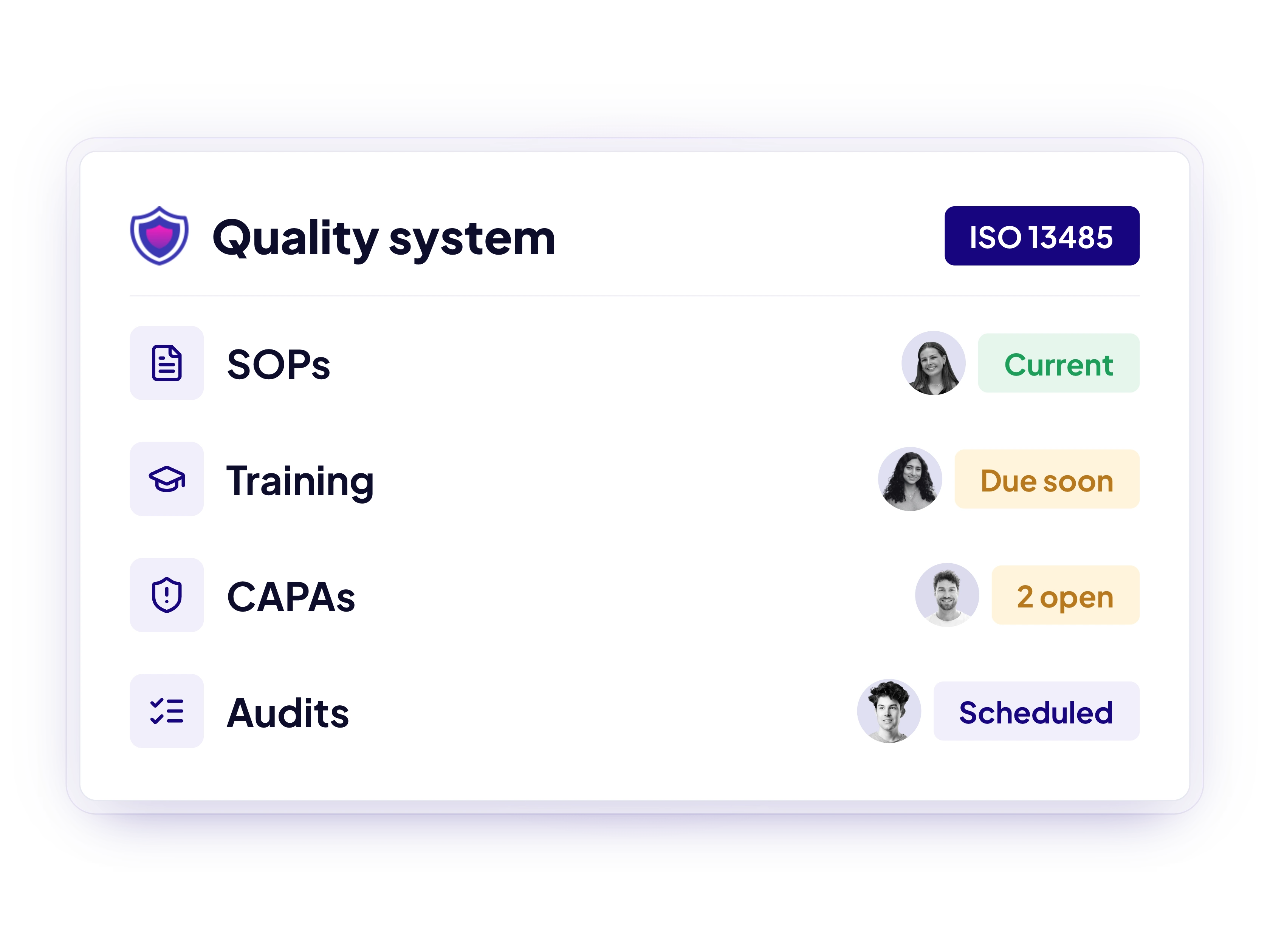
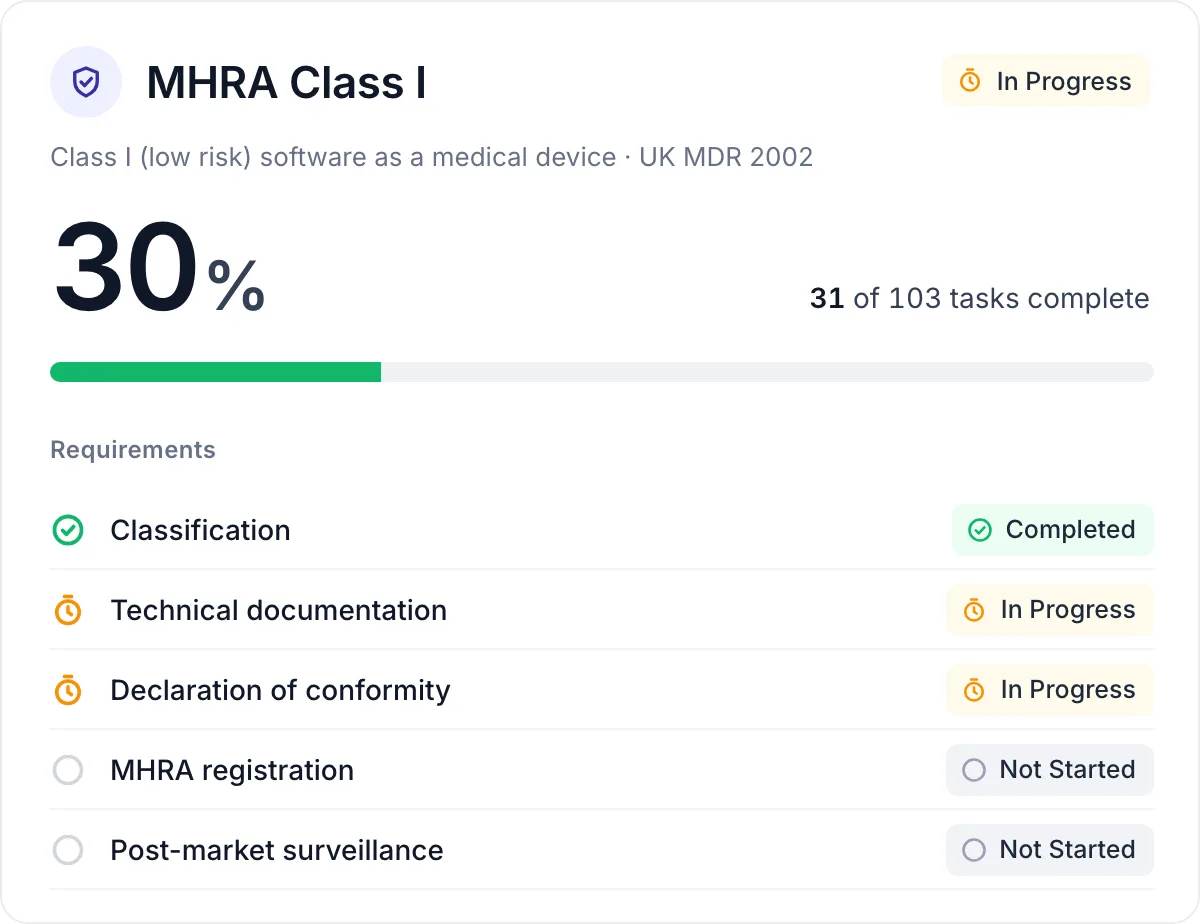
Assuric gives you the technical documentation, risk file and QMS evidence to self-certify your Class I device, all in one place.
Trusted bymedical device teams


Features
Complete eQMS
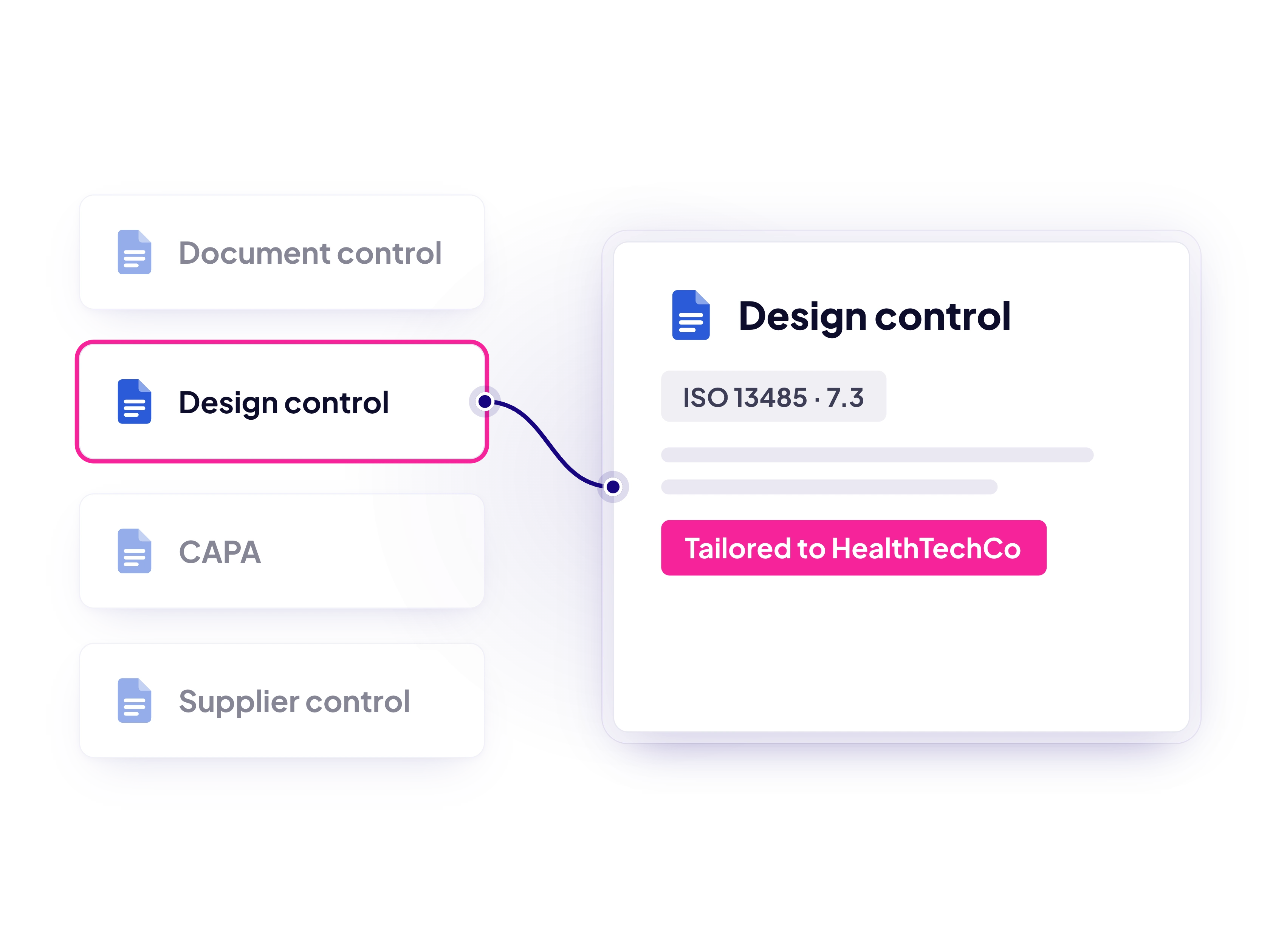
Design records, risk assessments and documentation kept against each release, so you can show what the product looked like at any point rather than reconstructing it from commit messages.

Medical device risk management
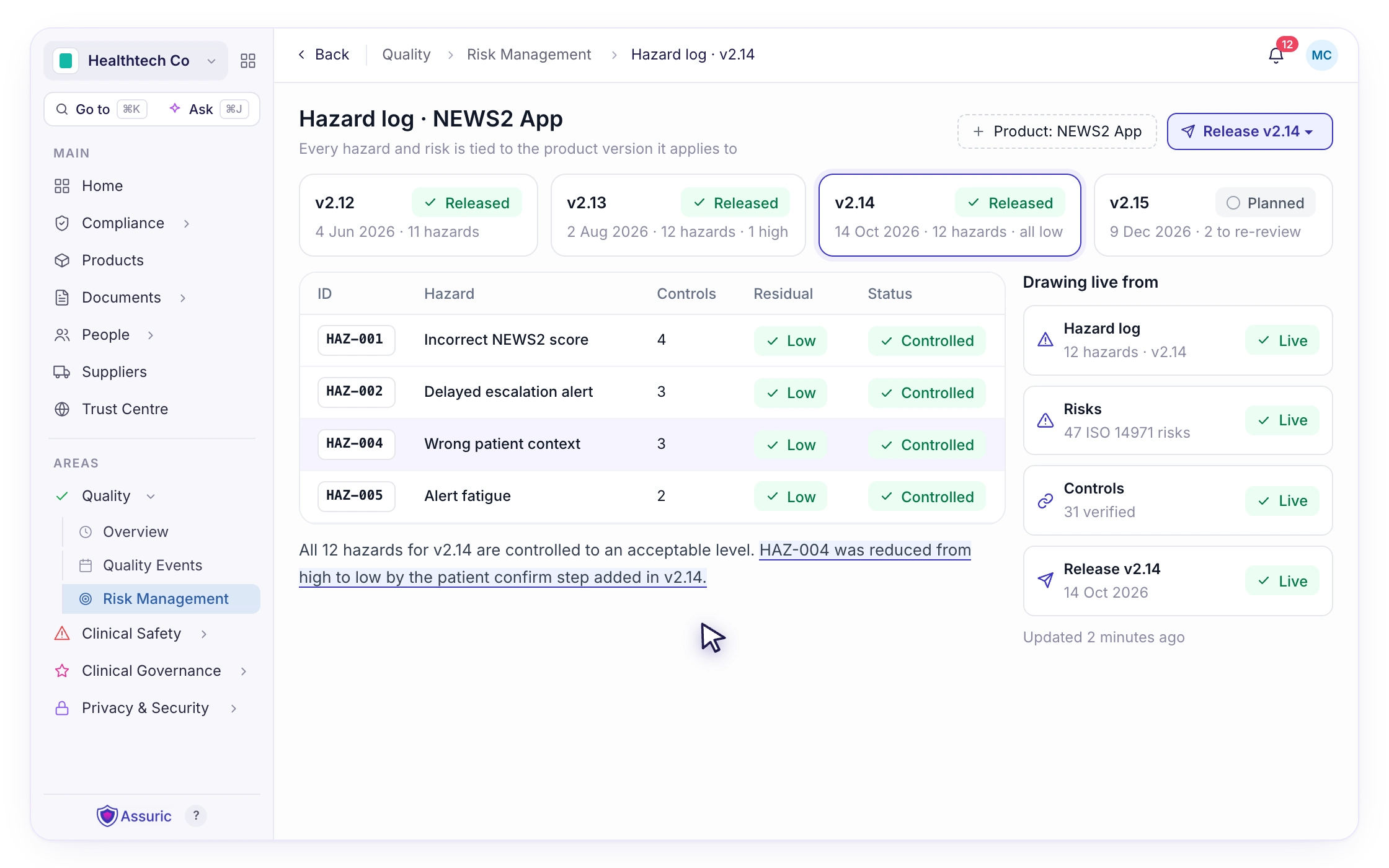
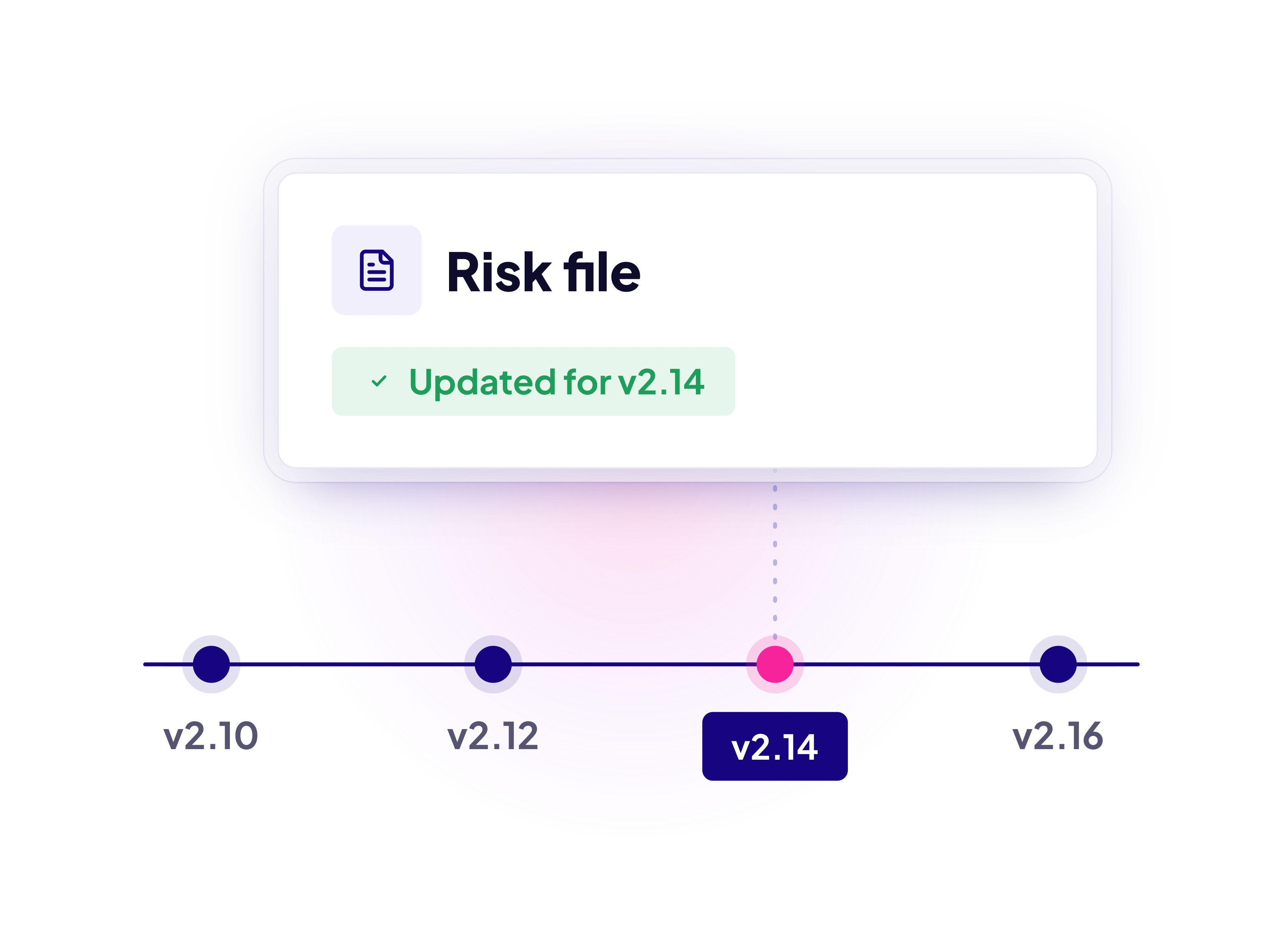
Hazards, causes, controls and residual risk in one file, reviewed as the product changes, with each risk pointing at the version it affects.

Post-market surveillance
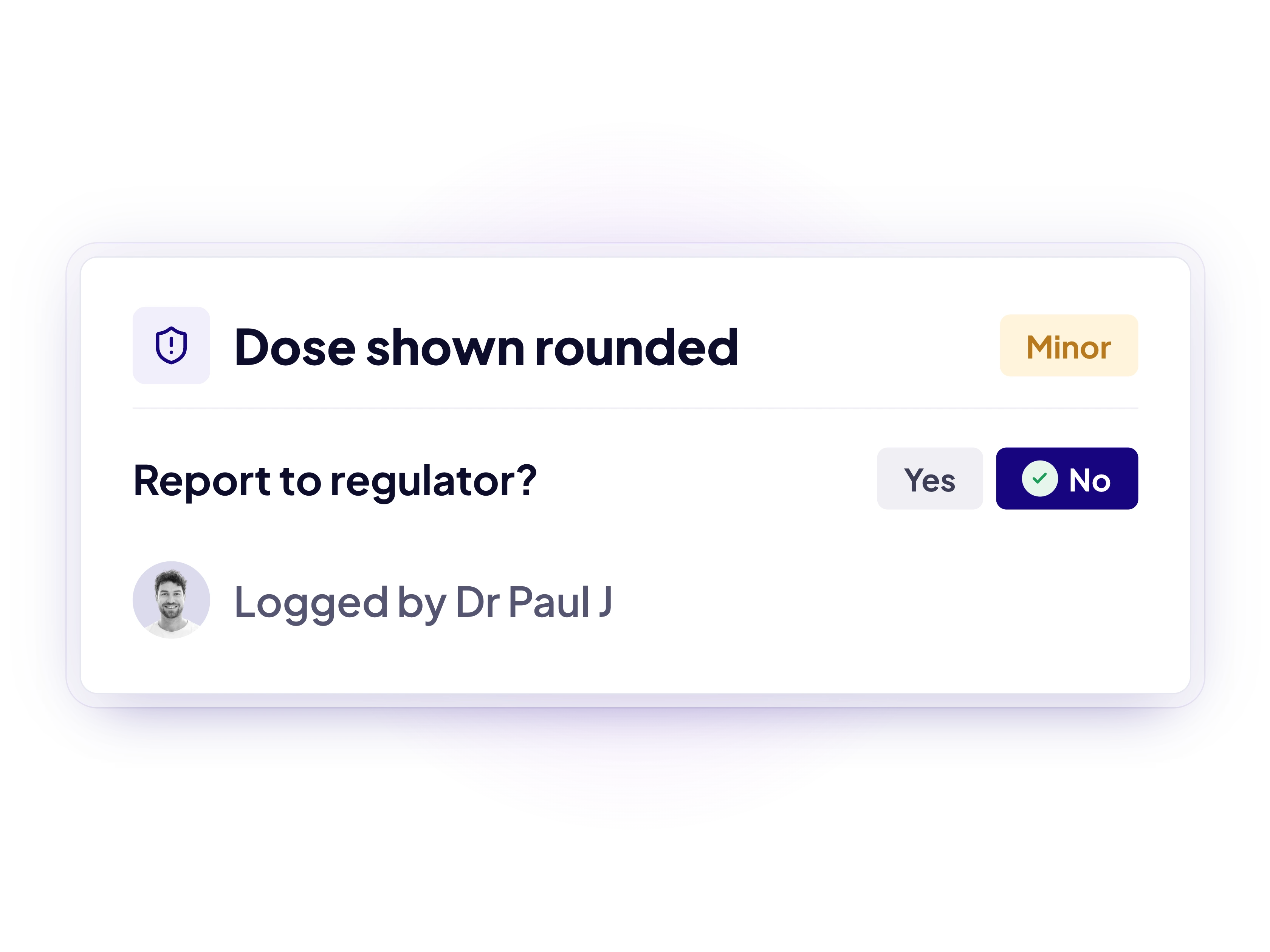
Incidents, complaints and user feedback in one surveillance record, with owners and dates, so the periodic review is a review rather than a year of catching up.
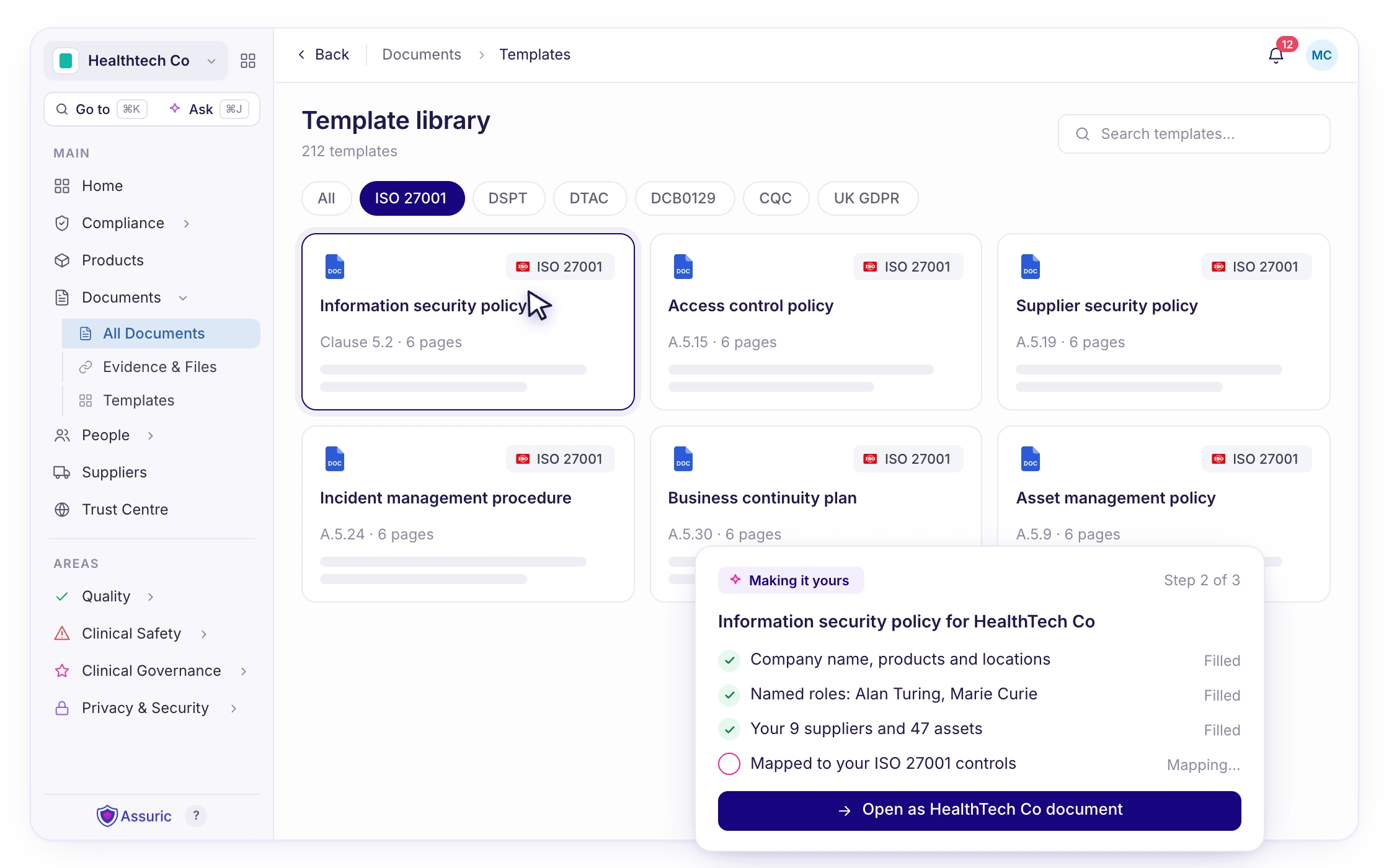
AI document drafting
A policy and SOP library your product and software team can write and follow themselves, edited to how you work rather than inherited from a vendor.
Benefits
At Class I you need documented design controls, risk management and post-market processes rather than a certified quality system. Having them in a real system is what makes moving up a class cheap later.
Procedures and policies written to pass audit at your size, so you start from something defensible rather than a blank page or a hardware manufacturer's manual.
Risks point at the release they affect, so when you ship you can see what needs reassessing instead of reviewing the whole file.
Not every incident meets the MHRA reporting threshold. Whichever way it falls, the decision and the reasoning behind it are held on the record.
Frameworks
Overlapping requirements and evidence are mapped across frameworks automatically, so you never do the same work twice.

“We couldn't speak highly enough of both the Assuric team and the platform itself, which is incredibly easy to use, and with the skill and hardworking nature of the Assuric team. They've been a key component in accelerating our progress and deployments!”
Maks Kozarzewski
COO, VitVio

“The Assuric platform is a game changer in the clinical risk management field. It has been carefully designed to make the job of a CSO significantly more streamlined. The team are excellent and responsive to any product suggestions I have requested, and it has been a pleasure to work with them.”
Paul Llewellyn
CCIO, Accenture

“Assuric has been fantastic in helping us quickly and safely navigate regulatory compliance in the UK. From completing Cybersecurity requirements to DSPT, DCB0129, and DTAC, the team was supportive, extremely knowledgeable, and the platform made everything quick and straightforward. A separate regulatory company we consulted at the beginning even remarked on how quickly we achieved compliance!”
Katie Baker
Director UK & Ireland, Tandem
Class I is the lowest risk class under the Medical Devices Regulations 2002, which the MHRA enforces in England, Wales and Scotland. For a Class I device that is not sterile, has no measuring function and is not a reusable surgical instrument, the manufacturer assesses conformity itself, draws up the technical documentation, issues a UK Declaration of Conformity, applies the UKCA mark and registers the device with the MHRA. No approved body is involved.
Four things. Technical documentation covering the device description and intended purpose, design and verification evidence, your risk management file, labelling and instructions for use, and your post-market surveillance plan. A UK Declaration of Conformity signed by the manufacturer. The UKCA mark applied to the device. Registration with the MHRA before the device is supplied in Great Britain. The declaration and the documentation have to be kept and made available to the MHRA on request for at least five years after the last device was placed on the market.
Yes, for three sub-categories. Class I sterile, Class I with a measuring function and Class I reusable surgical instruments each need a UK Approved Body, but only for the sterility, the metrology or the reprocessing aspects rather than the whole device. Software products are almost never in those sub-categories, so for most Class I software there is no approved body at all.
If the manufacturer has no place of business in the UK, yes. You must appoint a UK Responsible Person established in the UK, named on the registration, who acts for you with the MHRA, keeps the declaration and technical documentation available, and passes on complaints and incident information. A UK-established manufacturer registers directly and does not need one.
Not certification, in most cases. You still need documented design controls, risk management and post-market processes. If you expect to move to Class IIa it is much cheaper to build them properly at Class I than to retrofit them later, which is why the quality system is worth having in a controlled system from the start rather than in a folder structure.
Any manufacturer placing a Class I medical device on the market in Great Britain, including teams whose product is standalone software. If your software has a medical purpose, check its classification before assuming it sits outside the regime. Many software products that are higher risk in the EU are Class I in Great Britain.
The main difference is who assesses conformity. At Class I you declare conformity yourself, while at Class IIa a UK Approved Body assesses your device and your quality management system. Class IIa also means a certified quality system and an assessor examining your technical documentation.
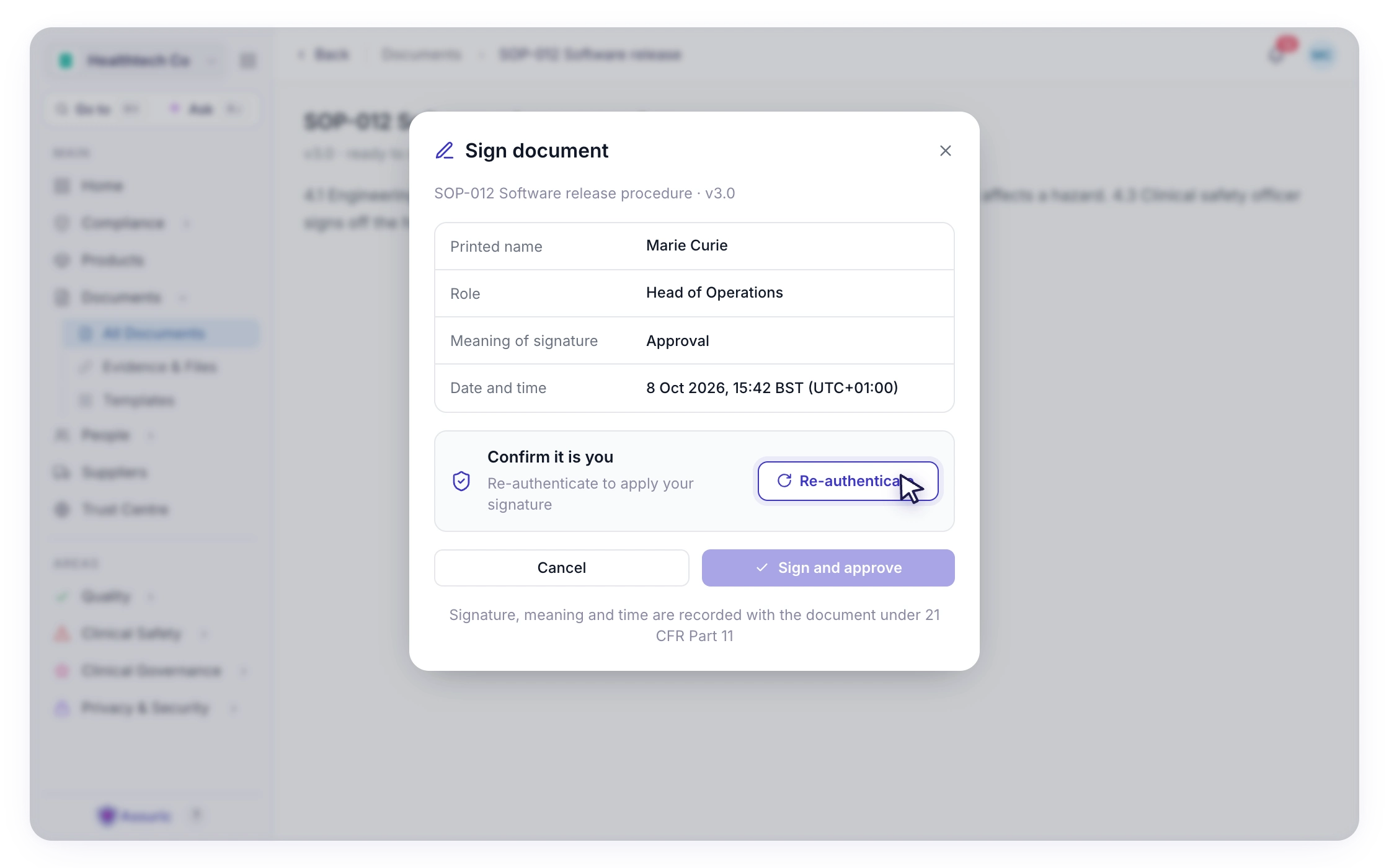
Assuric keeps the evidence a Class I manufacturer has to hold in one platform. Your technical documentation, ISO 14971 risk file, policies and post-market surveillance records sit together, each with an owner and a review date. Your declaration of conformity and supporting documents are held under version control, with 21 CFR Part 11 compliant electronic signatures on approvals.
Compliance now takes days or weeks depending on the framework, rather than months. Start with your classification and what it means for the file you have to hold.


