Experienced and skilled Clinical Safety Officers
A suitably qualified, experienced clinician acts as your named CSO, signing your clinical risk management plan, hazard log and safety case report.
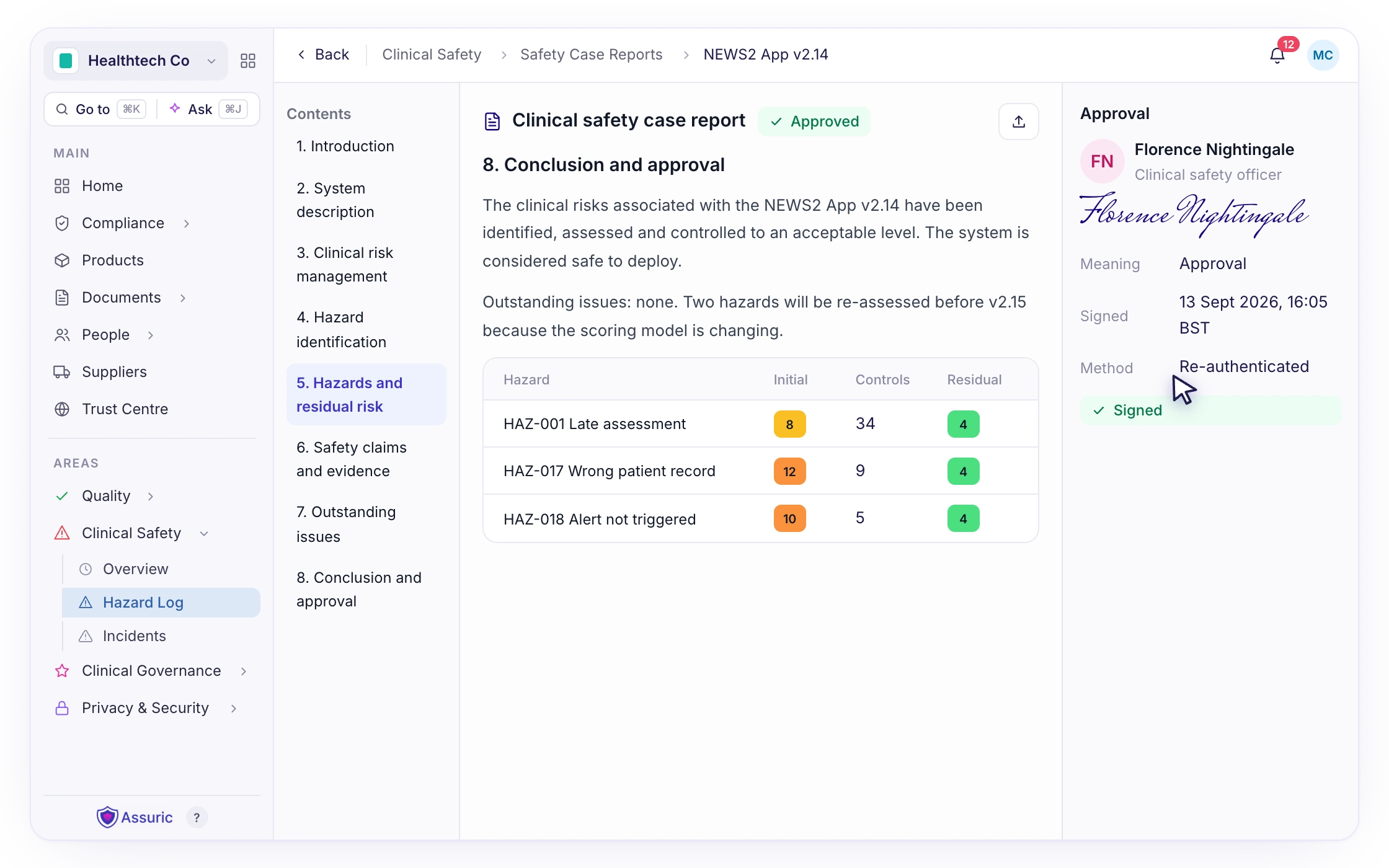
Your own experienced, named Clinical Safety Officer for your DCB0129/0160 obligations, working directly in your Assuric workspace.
Trusted by healthtechand healthcare


Features
A suitably qualified, experienced clinician acts as your named CSO, signing your clinical risk management plan, hazard log and safety case report.
Bring us in for a specific project such as DTAC readiness or a new release, choose a monthly retainer with regular check-ins, or combine the two.
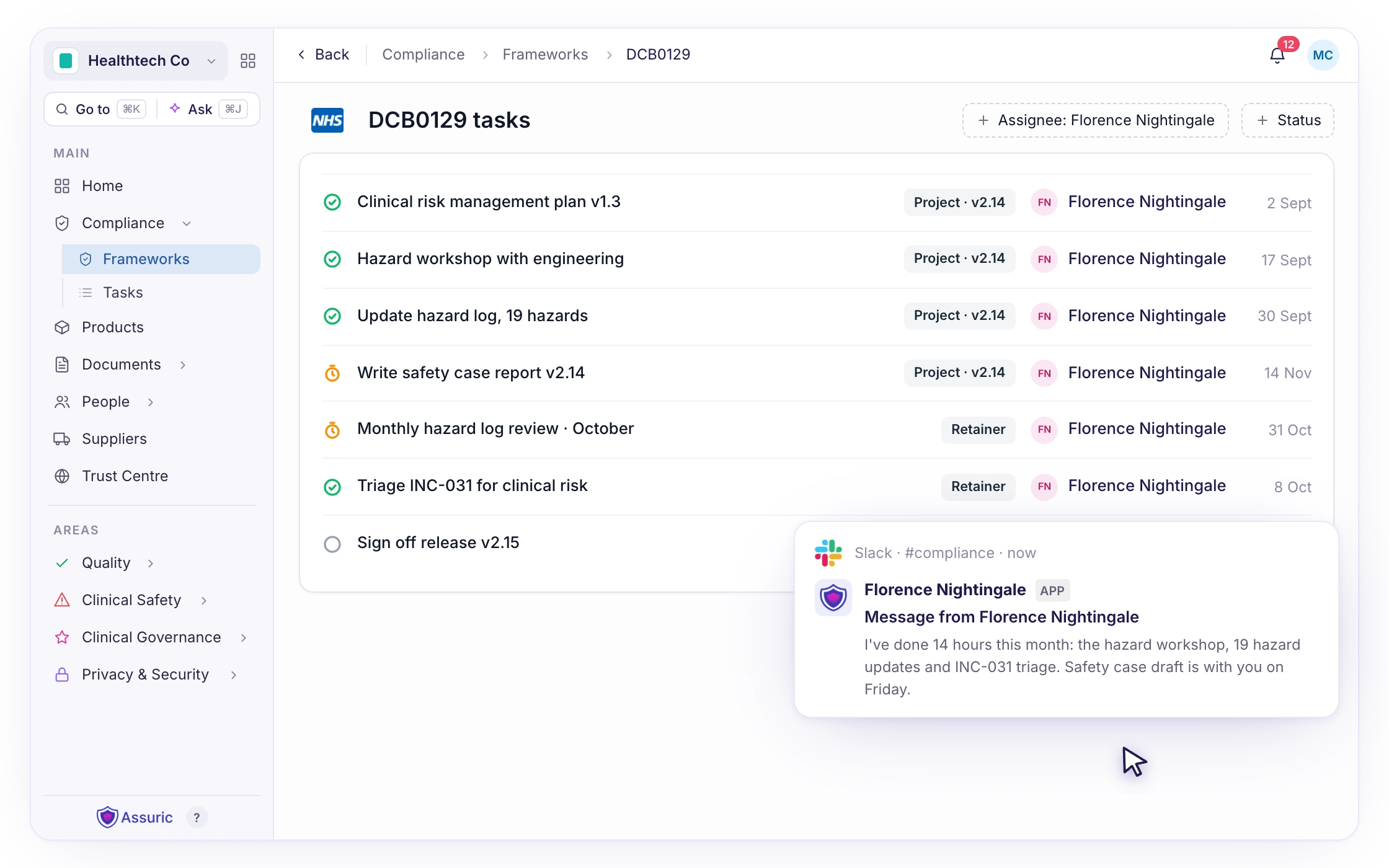
We lead your hazard workshops and complete your clinical risk management plan, hazard log and safety case report, ready for NHS review and DTAC.
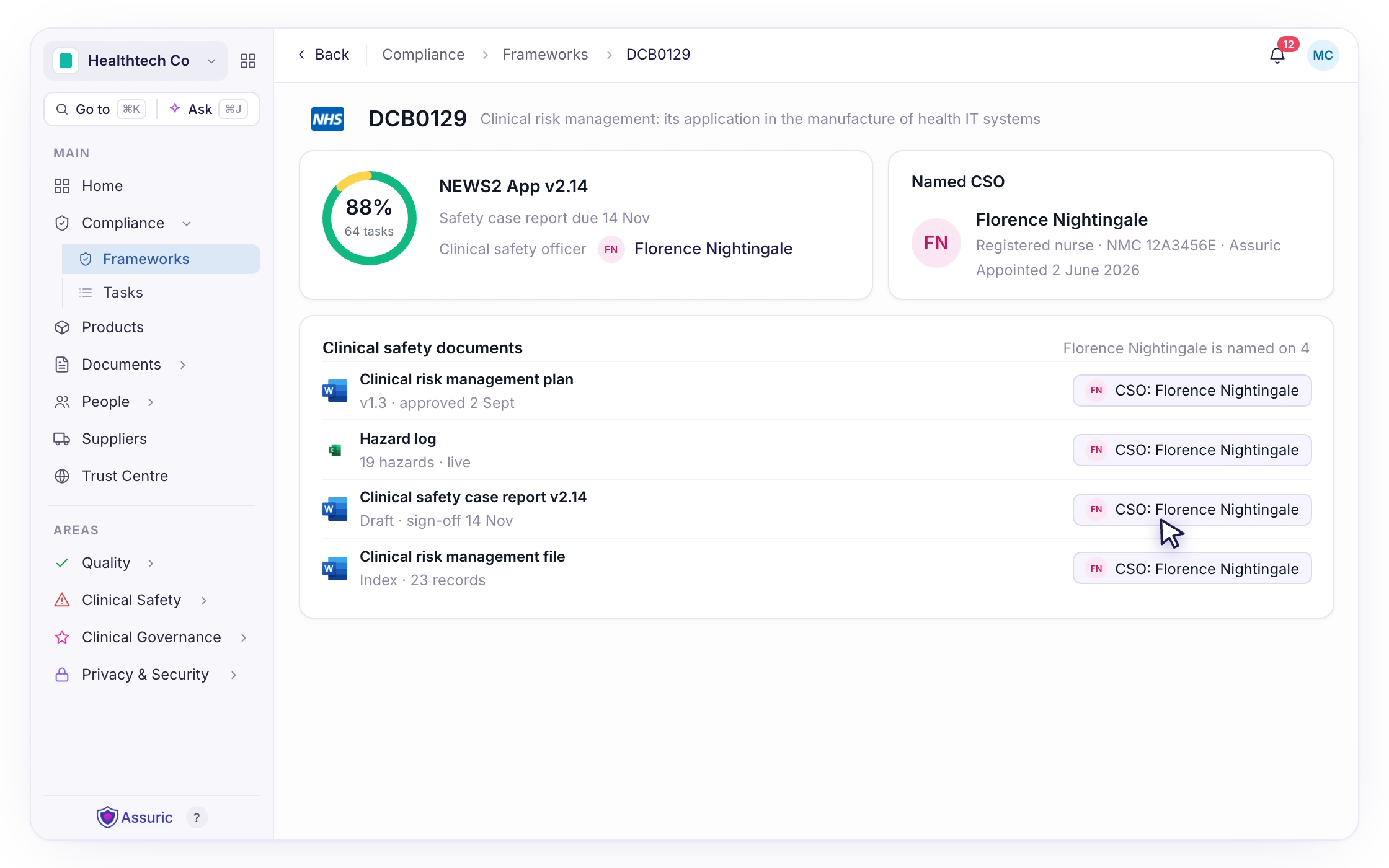
Extensive experience across DCB0129 for manufacturers, DCB0160 for healthcare organisations deploying health IT, and ISO 14971 for software and AI as a medical device, so your clinical risk management keeps pace as your product grows.
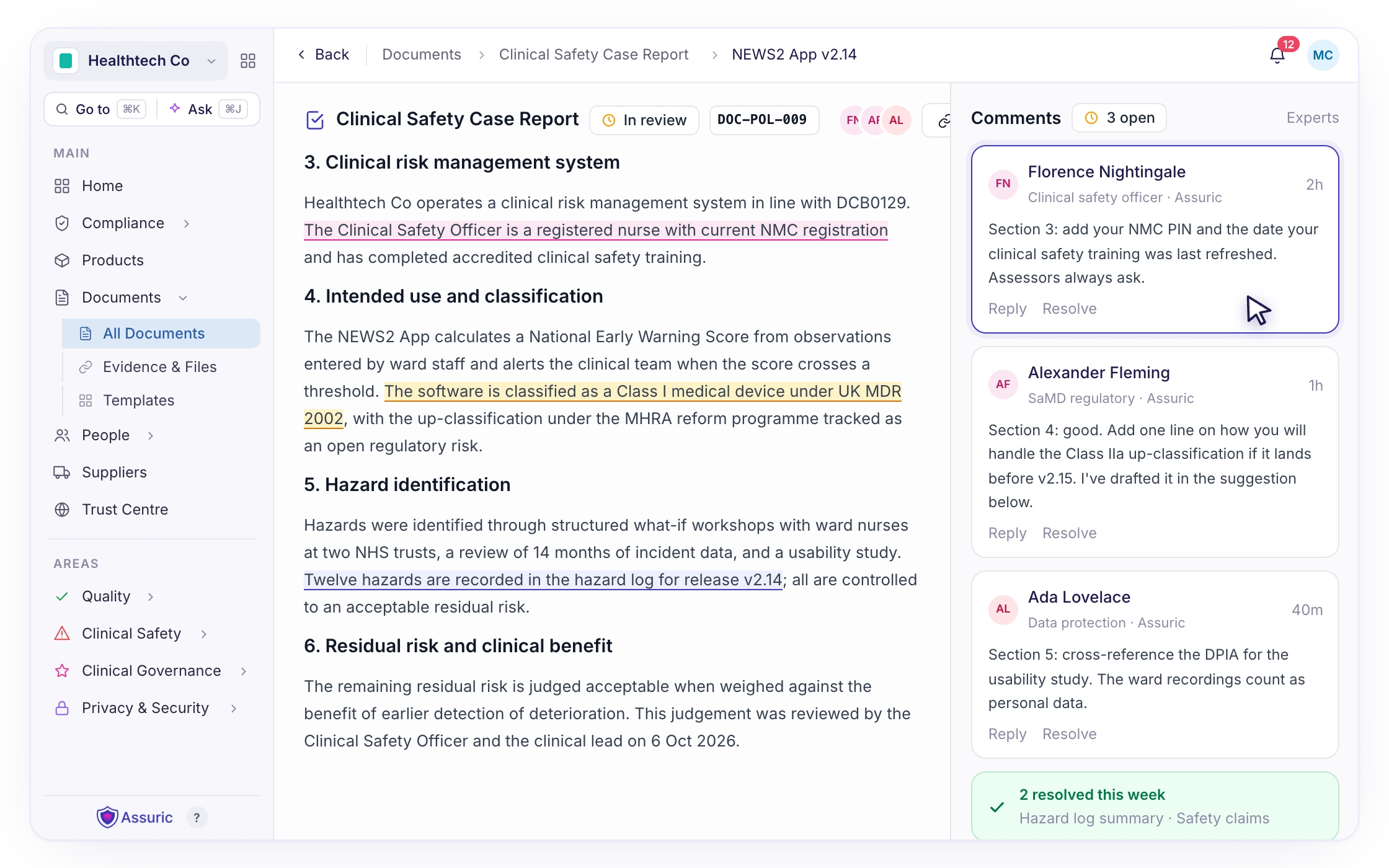
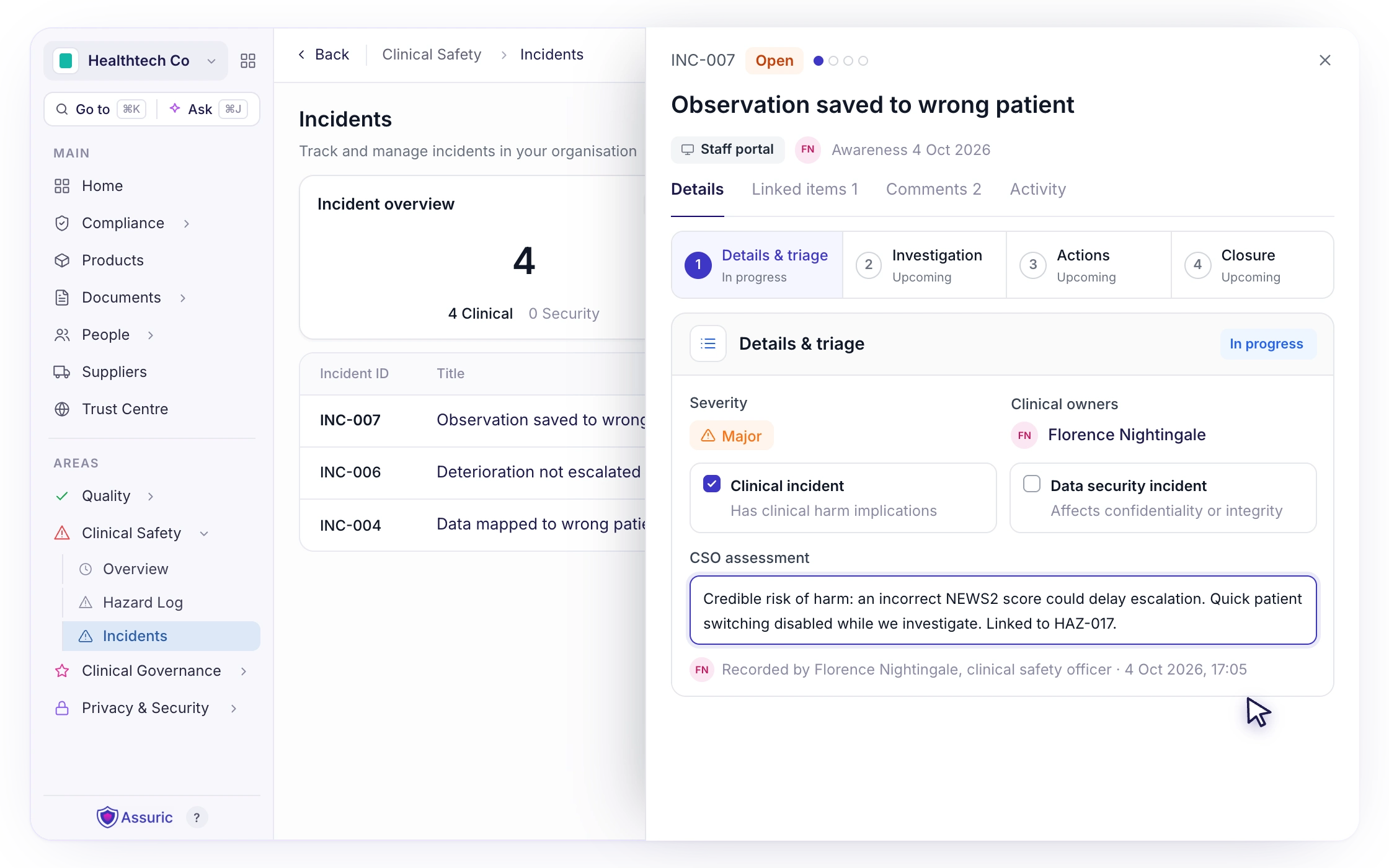
Your CSO triages and investigates clinical safety incidents, and acts as the point of contact for NHS organisations and other clients with clinical safety questions.
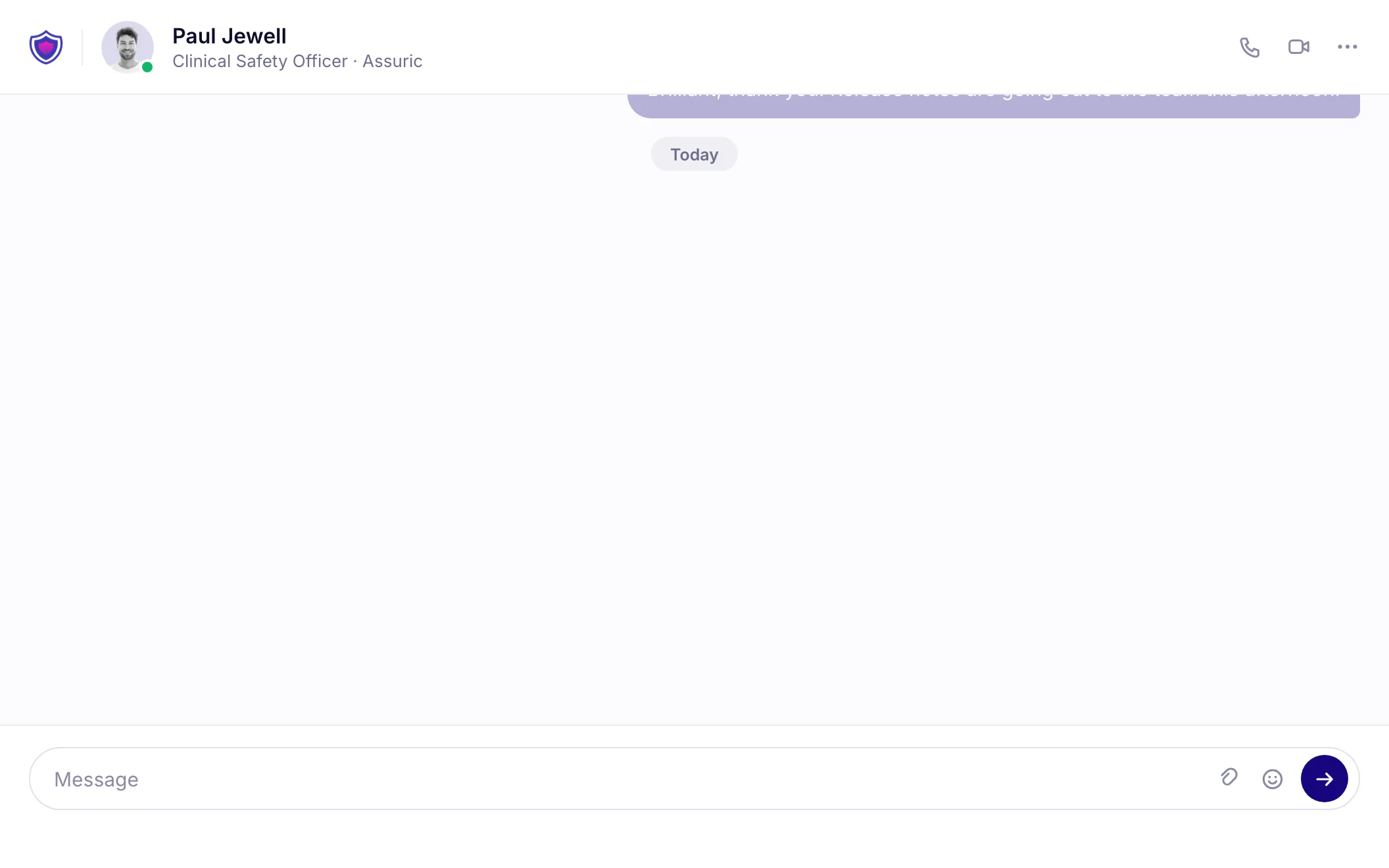
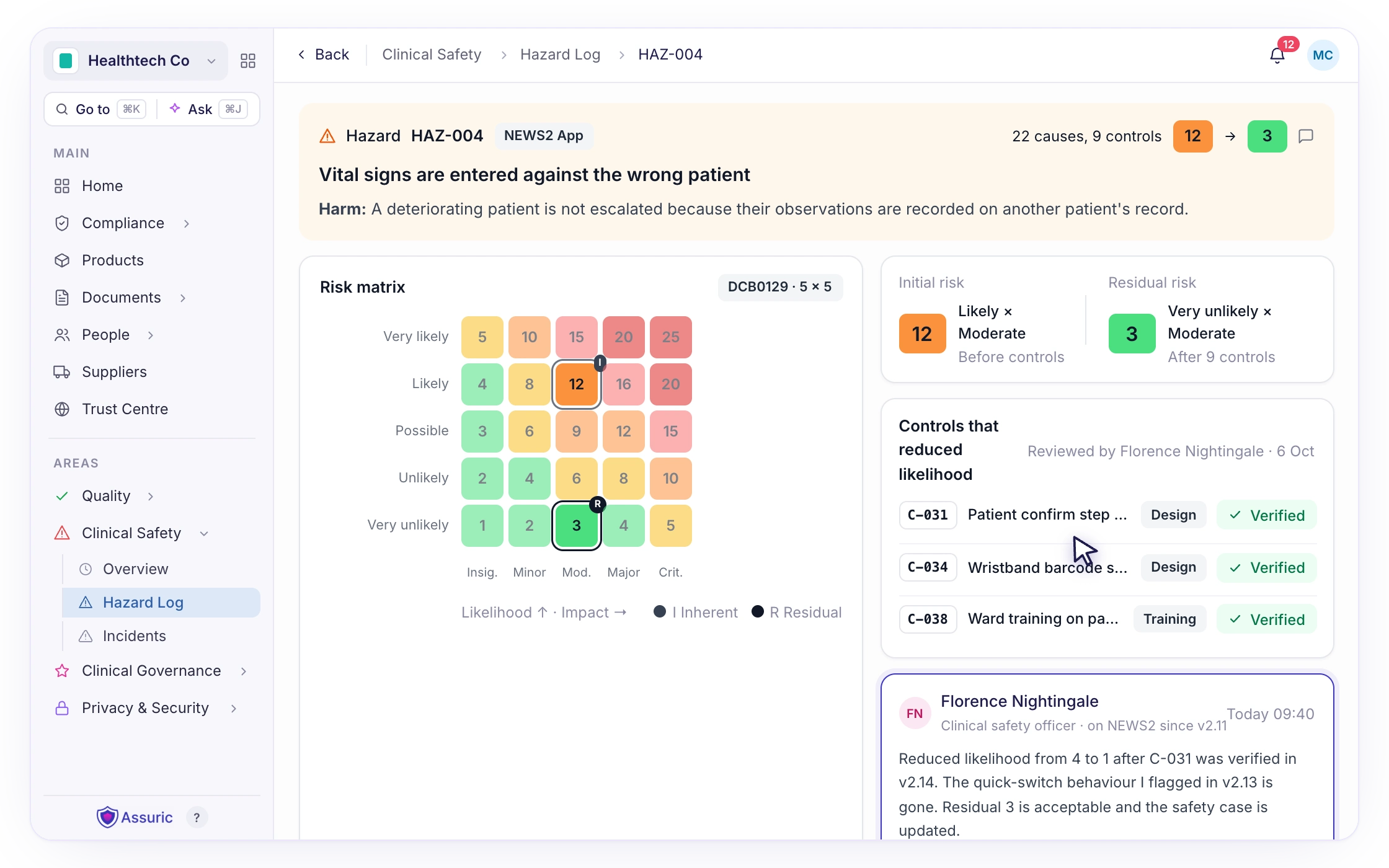
Your CSO works in your workspace and becomes fluent in your product, so reviews, sign-off and incident calls start from established context, with nothing lost in email threads.
Benefits
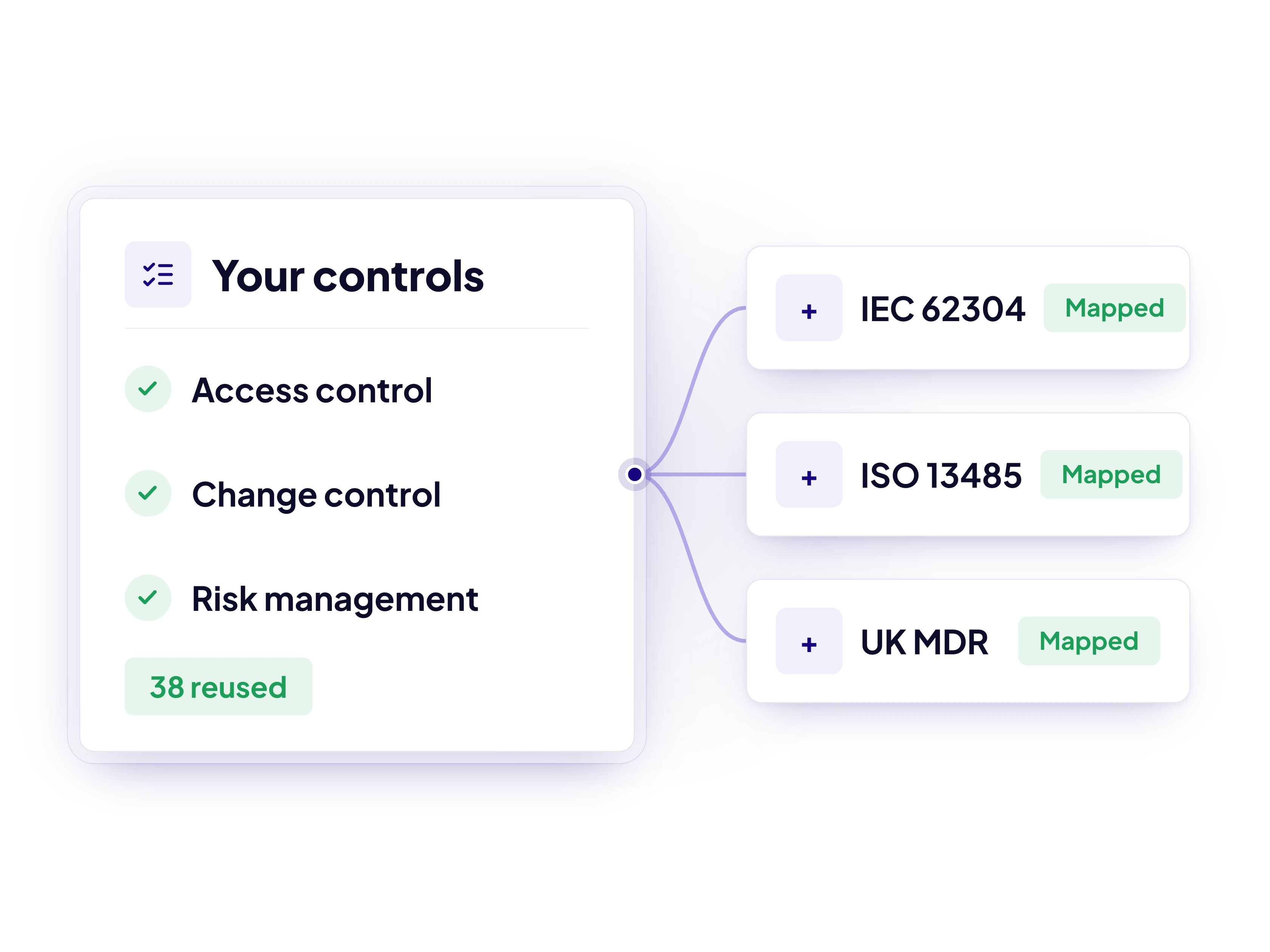
Assuric’s AI and automation take care of the routine clinical safety work, so your CSO’s time goes on expert advice, not admin.
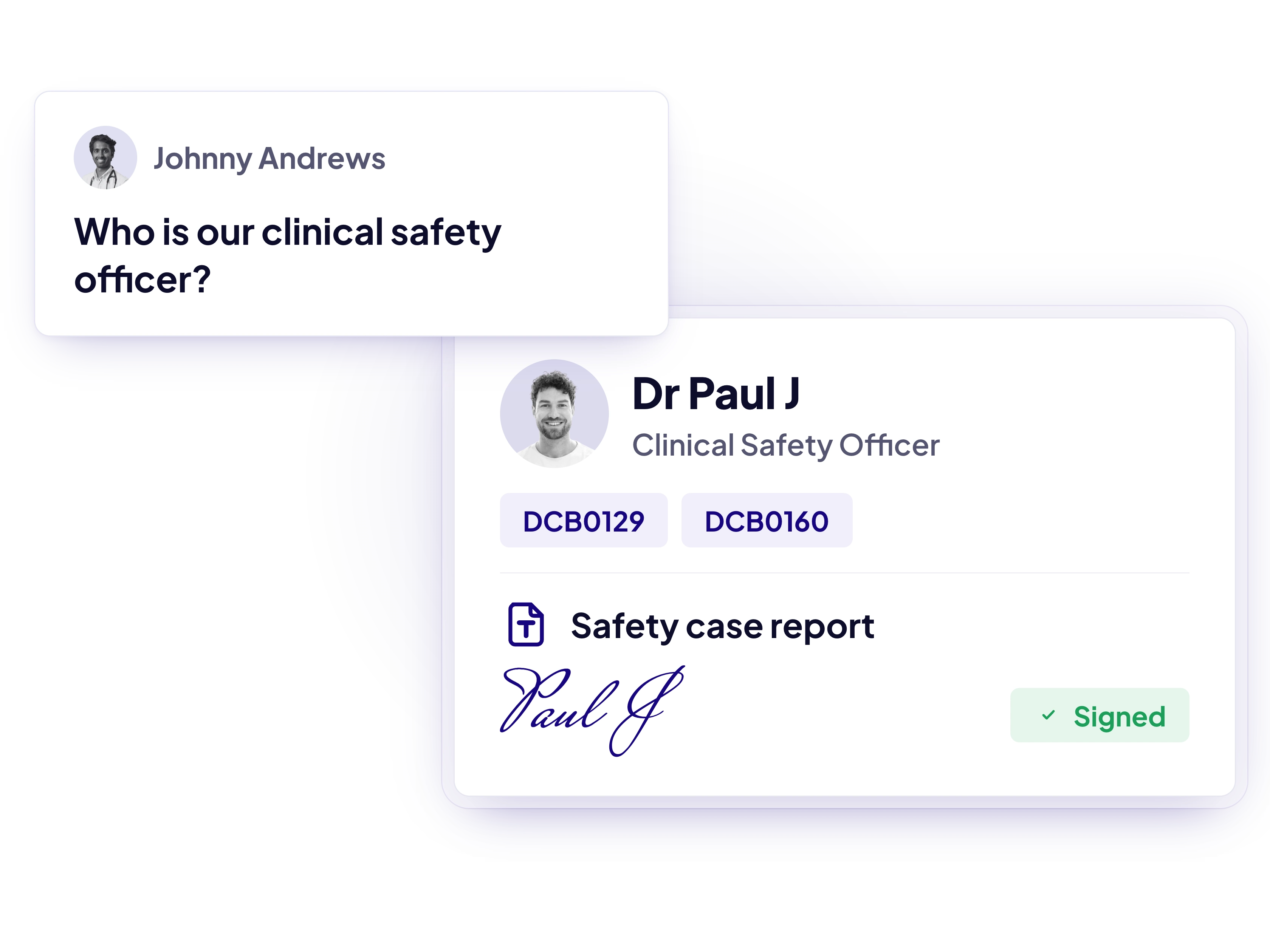
When an NHS trust asks who your clinical safety officer is, you have a qualified clinician who signs as your named CSO and can answer their questions.

Our CSOs cover each other, so leave, illness or a departure doesn’t leave you without a named officer.
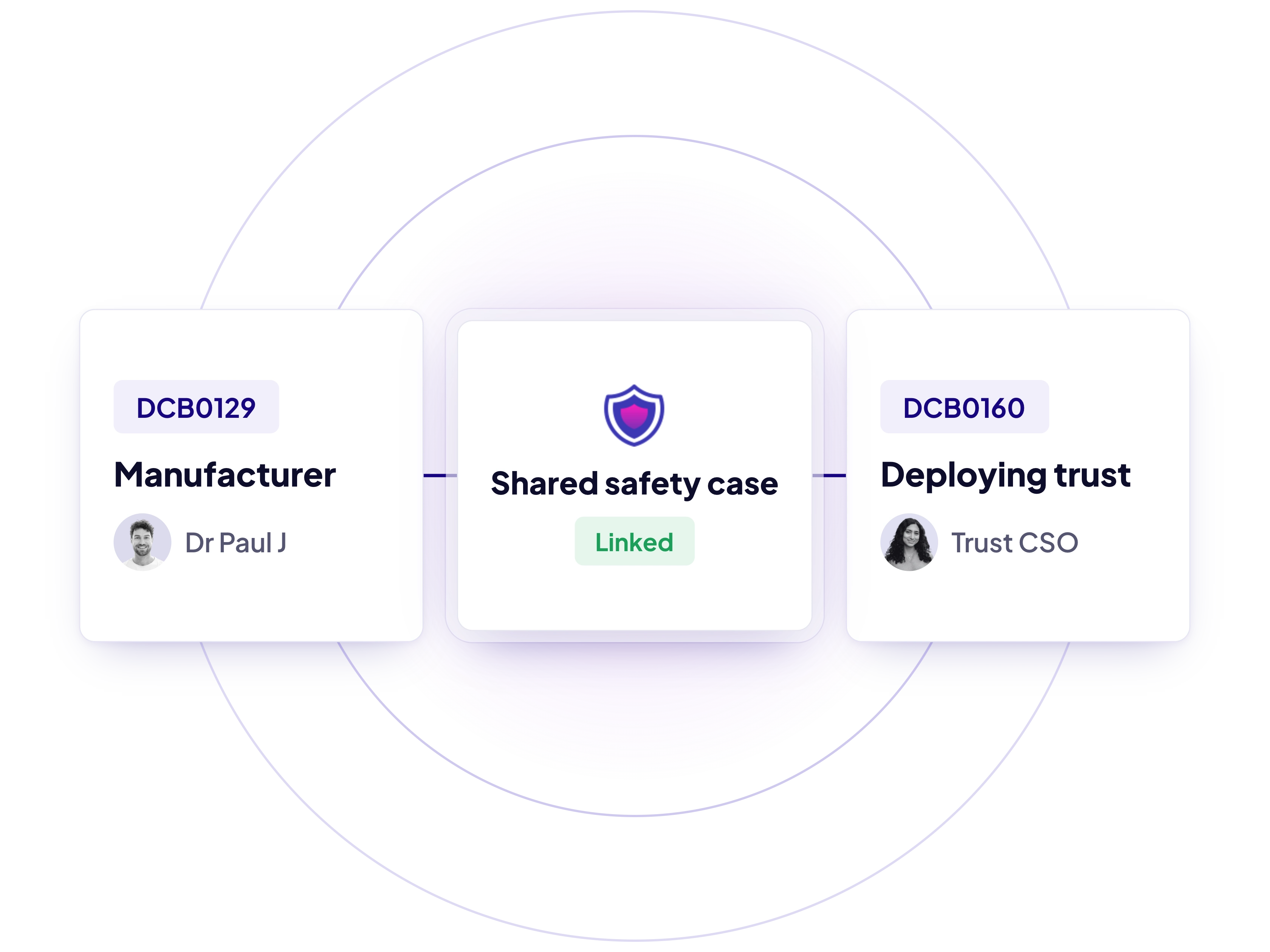
Hand the specialist clinical safety work to an expert, so your team can focus on building and running your service instead of learning the DCB standards.

Expert eyes on hazards, releases and incidents mean clinical risks are spotted early and handled properly, before they reach patients.

“We couldn't speak highly enough of both the Assuric team and the platform itself, which is incredibly easy to use, and with the skill and hardworking nature of the Assuric team. They've been a key component in accelerating our progress and deployments!”
Maks Kozarzewski
COO, VitVio

“The Assuric platform is a game changer in the clinical risk management field. It has been carefully designed to make the job of a CSO significantly more streamlined. The team are excellent and responsive to any product suggestions I have requested, and it has been a pleasure to work with them.”
Paul Llewellyn
CCIO, Accenture

“Assuric has been fantastic in helping us quickly and safely navigate regulatory compliance in the UK. From completing Cybersecurity requirements to DSPT, DCB0129, and DTAC, the team was supportive, extremely knowledgeable, and the platform made everything quick and straightforward. A separate regulatory company we consulted at the beginning even remarked on how quickly we achieved compliance!”
Katie Baker
Director UK & Ireland, Tandem
A CSO is a suitably qualified clinician who takes responsibility for clinical risk management in a health IT system. DCB0129 requires manufacturers to have one, and DCB0160 requires deploying organisations to have one. If you sell software into the NHS, you need a named CSO.
No. The role must be named, retained and appropriately qualified, but it can be held by someone external. A fractional CSO is common for smaller companies, where there isn’t a full role’s worth of work.
No. Currently the standards stipulate that the CSO must be a suitably qualified and experienced clinician, with current registration. You can, however, have non-clinical clinical safety engineers.
They work closely with your team to become fluent in your product, then review its safety, lead hazard workshops and build your hazard log, produce your clinical risk management plan and safety case report, triage and investigate clinical safety incidents, sign your clinical safety documents as your named CSO, and act as the point of contact for NHS organisations and other clients on clinical safety questions.
It depends on the scope of your product and deployments. We’ll scope it with you on a free call and give you a timeline and quote before you commit. Because your CSO works in Assuric, where AI and automation handle much of the routine work, you get expert support at a fraction of the cost of a full-time hire.
Time is set aside for your organisation each month, but that isn’t the only time your CSO is available. You can reach them whenever you need support, and hours can be increased or decreased at any time, depending on your agreement.
Yes. As well as manufacturers working to DCB0129, our CSOs support healthcare organisations deploying health IT under DCB0160, including the safety case for each deployment.
Yes. You can add it at any time, whether you’re just getting started with Assuric or have been using the platform for a while. Your CSO is set up in your existing workspace, so they can work from your records straight away.
Whether it’s a one-off project or ongoing support, we’ll find the right clinical safety cover for you.


